



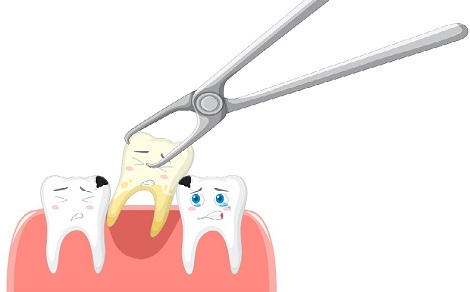
Losing a tooth can alter your appearance, affect your bite, and lead to bone loss over time; hence, making tooth extraction feel like a significant and daunting step. Fortunately, modern dentistry offers many tooth extraction alternatives that can help save your natural tooth or, when preservation isn’t possible, restore your smile most healthily.
In this article, we will explore reasons for tooth extraction, the best tooth extraction alternatives, their comparative advantages, and how to select the most suitable solution for your specific situation.
When Is Tooth Extraction Necessary?
According to the International Dental Journal, there are several reasons for tooth removal, including periodontitis and caries. However, dentists often consider extraction a last resort, preferring to preserve natural teeth whenever possible. However, there are situations where removal becomes unavoidable.

For example, a severely decayed or fractured tooth that cannot support a crown may leave extraction as the only option. Teeth broken below the gumline, those with advanced gum disease and bone loss, or those too infected to be effectively treated, also require extraction.
In orthodontics, teeth are sometimes extracted to relieve overcrowding; however, tooth extraction alternatives should still be explored. Wisdom teeth removal is another common example, often extracted when they cause pain or damage to surrounding teeth. While extractions are sometimes beneficial, it is always worth exploring whether tooth extraction alternatives might work first.
Best Tooth Extraction Alternatives
Tooth extraction should rarely be the first choice when dealing with a damaged or diseased tooth. Modern dentistry offers several highly effective tooth extraction alternatives aimed at preserving the natural tooth structure, maintaining jawbone integrity, and ensuring long-term oral health.
Root Canal Therapy
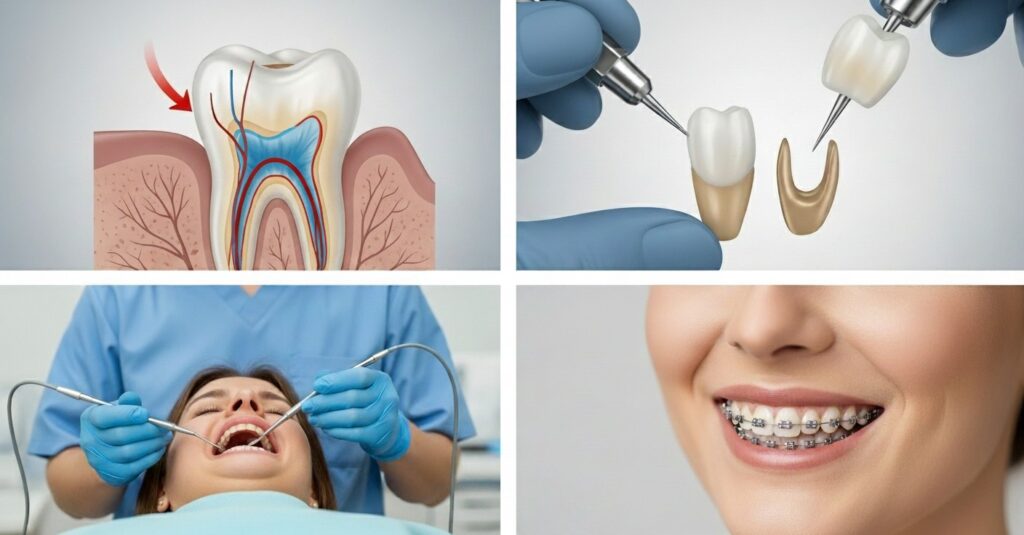
Root canal treatment is one of the most effective tooth extraction alternatives for saving a tooth that would otherwise need removal. The procedure removes infected pulp, cleans the canals, and seals the tooth, often followed by a crown to restore strength. Root canals can preserve the natural tooth for many years, providing a reliable tooth extraction alternative if enough healthy structure remains.
Dental Crowns for Preservation
Dental crowns are another widely used tooth extraction alternative. If a tooth is cracked, worn, or weakened (especially after a root canal), a crown acts like a protective cap. By restoring the tooth’s shape and durability, crowns allow it to function normally again. They are a valuable tooth extraction alternative for dental crown candidates when fillings are insufficient, but the root is healthy.
Periodontal Treatment for Gum Health
Sometimes, the problem isn’t the tooth itself, but a periodontal disease that affects the supporting gums and bone. Periodontal treatments, such as scaling, root planing, or surgical procedures, can restore gum health and stabilize a loose tooth. Regenerative techniques may even help rebuild lost support. These approaches are critical tooth extraction alternatives that can extend the life of natural teeth.
Orthodontic Solutions (Braces or Invisalign)
When crowding is the issue, extraction is sometimes suggested to create space. However, orthodontic treatments like braces or Invisalign are excellent tooth extraction alternatives that can reposition teeth without removal. By gently aligning teeth, orthodontics preserves the natural set while improving bite function.
Wondering about tooth extraction alternatives?
Contact Pearl Dental Group Today to find the best solution for your smile!
Comparing Effectiveness, Cost, and Longevity
Here’s a comparative look at how these tooth extraction alternatives stack up:
| Treatment | Effectiveness for Preserving Tooth | Approximate Cost (varies by region) | Longevity / Durability | Risks & Considerations |
| Root Canal + Crown | High (if tooth is restorable) | Higher upfront cost than extraction; cost of crown added | Risk of root fracture, re-infection, and needing retreatment | Crown alone (on a structurally sound tooth) |
| Crown alone (on structurally sound tooth) | Medium–High | Moderate | Dependent on the underlying tooth health | Dependent on underlying tooth health |
| Periodontal surgery / regenerative therapy | Medium (in moderate cases) | Moderate to High (surgery, grafting) | Variable; depends on patient hygiene and disease control | May not work if bone loss is extreme |
| Orthodontics (to relieve crowding/tension) | Low–Moderate (primarily preventative or adjunct) | Moderate | Long-term | Doesn’t treat infection or decay |
| Extraction + Replacement (bridge, implant, denture) | — | Extraction: relatively low; replacement: high | Implants/bridges can last decades; dentures may need adjustment or replacement | Bone loss, shifting of other teeth, cost and maintenance of prosthetics |
A key insight: although extraction may appear cheaper initially, the costs of replacement (implant, bridge, denture) plus the consequences of bone loss often make preservation via tooth extraction alternatives a more economical and healthful choice over time.
How to Choose the Right Tooth Extraction Alternative
Several factors, both personal and medical, influence the final decision between tooth extraction alternatives. We suggest consulting with a reliable dentist, bringing up your concerns, and asking questions to ease your mind. Moreover, when evaluating tooth extraction alternatives, you and your dentist should weigh the following factors:
- Extent of Damage and Remaining Structure: If a significant portion of the tooth is lost, extraction may be your only option.
- Health of Supporting Tissues: A treated tooth can fail if periodontitis undermines its foundation. Assess bone support and gum health.
- Risk of Failure: If the prognosis is poor, even after extensive treatment, extraction may be a safer option.
- Patient Factors: Age, health, financial budget, and willingness to maintain hygiene all matter when choosing a suitable tooth extraction alternative.
- Long-Term Strategic Planning: Preserving the tooth (if possible) or the alveolar bone is crucial if you may later need implants or bridges.
A clinician performs diagnostic tests (X-rays, scans) to determine which tooth extraction alternative is feasible. You can ask your dentist: “Given my situation, what is the realistic prognosis for saving it using these tooth extraction alternatives?”
The Verdict: Extraction Vs. Alternatives!
Tooth extraction is sometimes necessary, but it should be used rarely as a first choice. Tooth extraction alternatives such as root canal therapy, crowns, periodontal treatment, and orthodontics provide effective and less invasive ways to preserve your natural teeth. Even if extraction becomes unavoidable, modern replacements can restore your smile.
The key is to work with your dentist, understand the long-term consequences, and choose the option that best protects your health and confidence.
FAQ
-
What are the best tooth extraction alternatives if my tooth is damaged or decayed?
Root canal therapy and dental crowns are the most reliable tooth extraction alternatives, with periodontal treatment also helping in some cases.
-
Can I avoid tooth extraction if I get a root canal instead?
Yes, if enough healthy tooth remains. A crown is usually placed afterward to strengthen it, making it a viable tooth extraction alternative.
-
How do dental implants compare to tooth extraction in terms of long-term benefits?
Implants replace missing teeth, last decades, and preserve bone, but they are more costly and involve surgery than the initial extraction.
-
Are partial dentures a good tooth extraction alternative if I have multiple missing teeth?
Yes, they’re affordable and non-invasive, though less stable and comfortable than implants or bridges.
Have you ever had your tooth extracted? Or do you have any experience with these tooth extraction alternatives? Share your experience or drop your questions in the comments so others can learn from you.