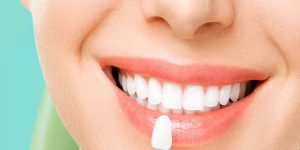




When it comes to choosing between a dental veneer vs crown for your compromised tooth or smile glow-up, discovering the key differences helps you make the best decision. While veneers prioritize aesthetics, crowns focus on function and protection, making the right choice dependent on your dental needs.
Whether you’re looking to fix tooth discoloration, minor tooth damage, or want a complete smile makeover, it’s essential to have adequate information on dental veneers vs. crowns to choose the best for your needs! Let’s break it down further so you can figure out which dental restoration is best for you.
Dental Veneer vs Crown: Key Differences
Before deciding between a dental veneer vs crown, you should know how these two differ in purpose, materials, durability, and procedure. Let’s review how each method suits various yet specific dental concerns.
| Feature | Veneers | Crowns |
| Purpose | Cosmetic enhancement (color, shape) | Full tooth coverage (protection, strength) |
| Coverage | Front surface of the tooth | Entire tooth |
| Material | Porcelain, composite resin | Porcelain, metal, zirconia |
| Durability | 10-15 years | 10-20 years |
| Tooth Prep | Minimal shaving of enamel | Significant reshaping of the tooth |
| Best For | Minor chips, discoloration, aesthetic improvement | Severe damage, decay, or weak teeth |

Purpose and Functionality
Perhaps the key indication of these two techniques is the cornerstone for deciding between a dental veneer vs crown.
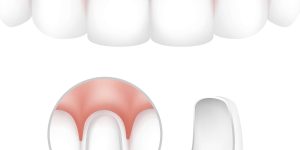
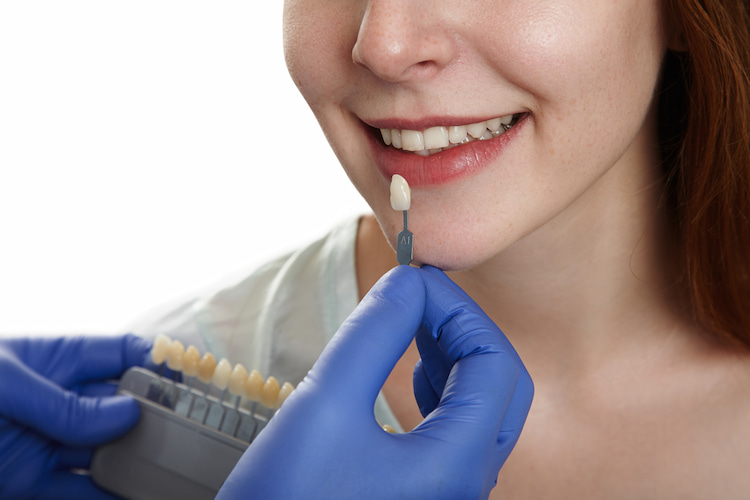
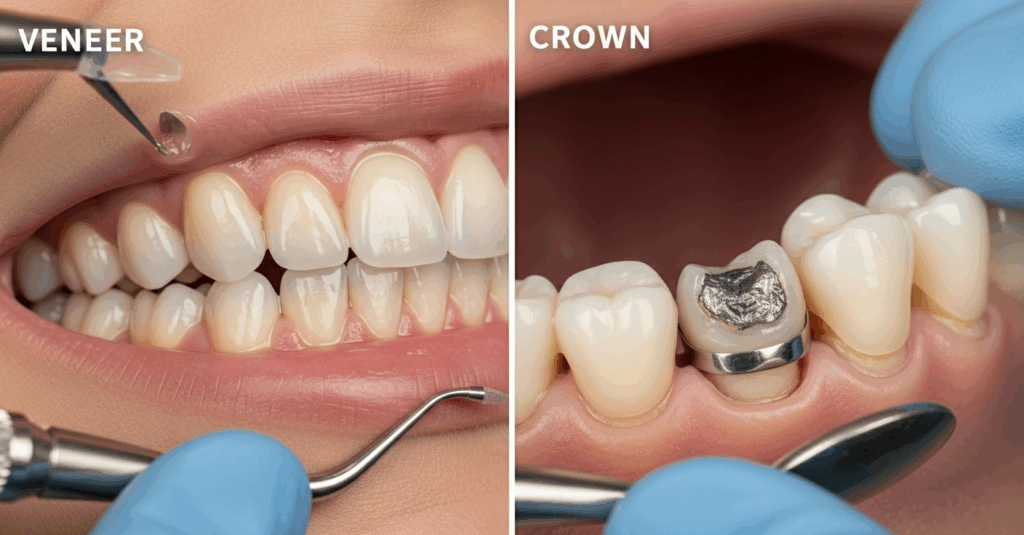
Veneers are thin and customized shells made of porcelain or composite resin. They are used to adhere to the front surface of teeth.
As implied, veneers are primarily used in cosmetic dentistry due to their transformative effects on teeth.
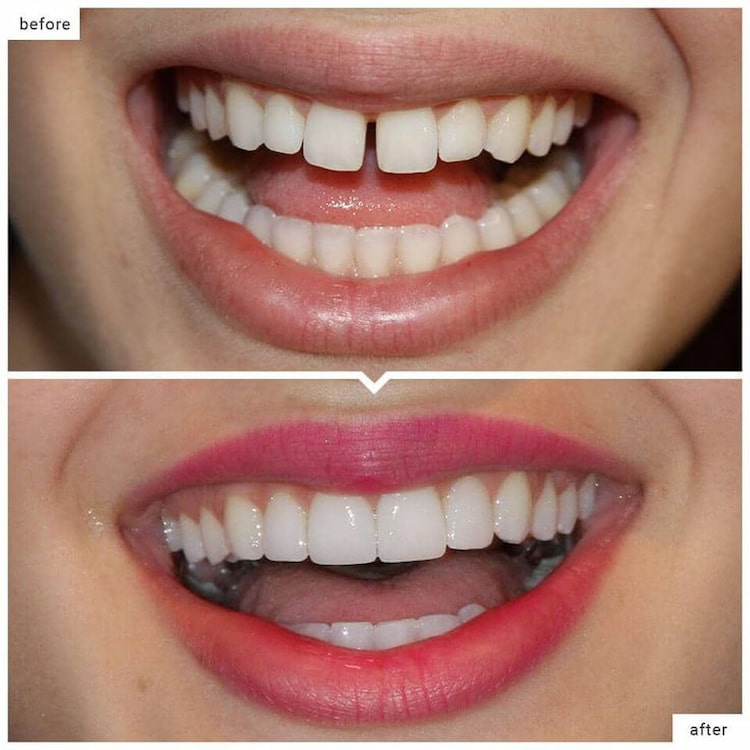
For instance, veneers are a first-choice treatment for coffee-stained teeth that are unresponsive to whitening, or uneven frontal teeth with small gaps.
However, non-cosmetic reasons for veneers include providing support and strength, while still enhancing dental aesthetics without breaking the tooth’s basic structure, making them a go-to for smile makeovers that prioritize a natural look!
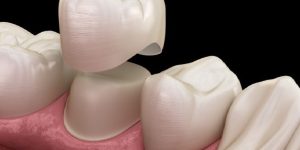
Crowns, however, are tooth-shaped caps that can fully cover the tooth, above the gumline. Their designs have made them serve two core purposes: rebuilding structural dental integrity and enhancing aesthetics. They are the perfect choice for weakened teeth, whether by severe decay, cavities, or fractures; Also, as a cover for teeth that have undergone root canal therapy.
Dental crowns vary in applications, from cosmetic crowns to restorative ones, especially for back teeth that handle heavy chewing forces!
Material and Durability
Many patients struggle in choosing between a dental veneer vs crown because they’re not sure which one would last longer!
Porcelain veneers are famous for their durability, stain resistance, and mimicking the appearance of natural teeth, which have made them a go-to choice for a celebrity smile.
Composite resin veneers are more affordable, but they provide less resistance. These veneers are prone to discoloring if you eat or drink too much coffee, red wine, or other staining foods. With diligent oral hygiene, such as brushing twice daily, flossing, and avoiding excessive force, porcelain veneers can last 10 to 15 years. In comparison, composite veneers usually last 5 to 7 years before needing replacement or touch-up.
Crown materials include porcelain, ceramic, zirconia, porcelain-fused-to-metal (PFM), or metal alloys (like gold or nickel). Porcelain crowns are ideal for front teeth due to their natural, tooth-like appearance. However, metal crowns provide unmatched durability for molars subjected to intense chewing. Zirconia crowns are famous for having a natural look and a metal-equivalent strength.
With proper care, including regular dental checkups and avoiding bad chewing habits (such as ice chewing), crowns can last 15 to 20 years or longer. Healthline explores dental veneer vs crown as: veneers resist stains better than natural teeth, but crowns offer greater structural strength.
Procedure and Tooth Preparation
The dental veneer process is minimally invasive and requires the removal of just 0.5 to 1 millimeters of enamel from the tooth’s front surface to ensure a fine fit.
After precise examination, a dental lab fabricates custom veneers for bonding to the tooth using a strong dental adhesive. The procedure is done during 2 or 3 sessions: an initial consultation, enamel preparation and impressions, and final bonding.
Most patients experience minimal to zero discomfort, and anesthesia is rarely needed, making this technique a fast solution with no life disruption.
In the procedural aspect of dental veneer vs crown, crown placement is more extensive and involves removing 1 to 2 millimeters of tooth structure.
If the tooth is severely decayed or damaged, additional steps like core buildup (to reinforce the tooth’s foundation) or root canal therapy may be required to ensure stability. After reshaping and reassuring the foundation, impressions are taken, and a temporary crown protects the tooth while the permanent one is crafted in a lab. The process usually takes 2 or 3 sessions, and often involves local anesthesia due to the invasive nature of tooth preparation.
Patients may experience some discomfort or temporary sensitivity, but crowns provide lasting protection and functionality.
Cost
Another determining factor in deciding between a dental veneer vs crown is their costs!
The cost of veneers and crowns varies based on the material, geographic location, dentist’s expertise, and the complexity of the procedure.
Porcelain veneers typically range from $800 to $1,200 per tooth, reflecting their high aesthetic quality and the cost of lab customization. Composite veneers, applied directly in the dentist’s office, cost $300 to $600 per tooth but offer less durability.
Crown services vary due to the specifics of the tooth damage, materials used, and required services. However, they typically range from $1,500 to $1,900 per tooth, with durable materials like zirconia or PFM at the higher end. Crowns are among the services covered by CDCP, but veneers are often considered cosmetic and rarely covered, requiring out-of-pocket payment.
Longetivity
One concerning aspect of many patients, when deciding between a dental veneer vs crown, is their durability and maintenance.
Porcelain veneers last 10 to 15 years with proper care, while composite veneers may need replacement after 5 to 7 years due to wear or staining.
Crowns, particularly those made of zirconia or porcelain, can last 20 years or more, especially with consistent oral hygiene practices like brushing, flossing, and biannual dental visits.
Both treatments benefit from avoiding hard foods and using a nightguard if you grind your teeth.
When to Choose a Veneer or a Crown
The decision between dental veneer vs crown hinges on your dental health, aesthetic goals, and the condition of the affected teeth.
Let’s review some of the main scenarios to guide you to your choice.
Best for Cosmetic Improvements
If you have structurally sound teeth and seek an aesthetic glow-up, a veneer is the right choice!
Veneers are the go-to option for:
- Stubborn stains resistant to professional whitening, such as those caused by tetracycline or long-term coffee consumption
- Minor chips or cracks from minor trauma, like biting into a hard apple
- Small gaps between teeth that don’t require orthodontic treatment
- Slightly crooked or uneven teeth
For example, a patient embarrassed by discolored front teeth will benefit from porcelain veneers to achieve a Hollywood-style smile without extensive tooth alteration. In this aspect of dental veneer vs crown, veneers are ideal for front teeth, where aesthetics are paramount, and their minimally invasive nature preserves more natural tooth structure.
Best for Damaged or Weakened Teeth
However, if you have a case of severe structural issues, decay, or cavities, we recommend considering dental crowns.
Crowns are ideal for:
- Severe decay or large cavities that weaken the tooth’s core
- Fractured or cracked teeth from trauma or grinding
- Teeth weakened by root canal therapy
- Support for dental implants or bridges to restore missing teeth
For instance, a patient was struggling to decide between dental veneer vs crown, and they had a cracked molar from years of grinding, so they needed a crown to restore strength and prevent further deterioration. Crowns are suitable for both front and back teeth and provide critical protection for long-term oral health.
Need Help Choosing Between Dental Veneer vs Crown?
Contact Pearl Dental Group Today!
If you’re dealing with tooth damage, discoloration, or pain, don’t wait. Our team at Pearl Dental Group can help you choose the right solution. Contact us and restore your smile today!
Pros and Cons of Veneers and Crowns
Even though the pros and cons of dental veneers and crowns are strictly dependent on their indication, the following table compares the significant aspects of dental veneer vs crown to simplify this decision for you:
| Feature | Pros of Veneers | Cons of Veneers | Pros of Crowns | Cons of Crowns |
| Appearance | Highly aesthetic, natural look | Can be irreversible | Restores both appearance and function | More invasive procedure |
| Durability | Long-lasting with proper care | Can chip or crack | Stronger than veneers | Higher cost |
| Stain Resistance | Resists stains well | May discolor over time | Stain-resistant options available | Metal crowns may not be aesthetic |
| Tooth Protection | Minimally invasive | Doesn’t strengthen weak teeth | Provides full protection | Requires more tooth reshaping |
Veneer vs. Crown: Personalized Choice for Your Perfect Smile!
Choosing between a dental veneer vs crown depends on your unique dental needs, aesthetic aspirations, and budget.
In our own experience, we’ve worked with patients who initially wanted veneers for a perfect smile but later chose crowns because their teeth needed more support. Another patient, however, had a front tooth with a small chip and deep staining. A veneer gave them a seamless smile without needing major dental work.
FAQ
-
What is the main difference when deciding between dental veneer vs crown?
Veneers are thin shells that cover the front of teeth for cosmetic improvements.
Crowns encase the entire tooth for both aesthetic and structural restoration. -
When should I choose a veneer instead of a crown?
Choose veneers for minor cosmetic issues like stains, chips, or gaps in healthy teeth.
Crowns are better for damaged or weakened teeth that need structural support. -
Which lasts longer: veneers or crowns?
Crowns typically last longer (15–20 years) than porcelain veneers (10–15 years) or composite veneers (5–7 years), depending on the material and aftercare.
-
Do veneers or crowns require more tooth preparation?
Crowns require more preparation since they involve removing 1–2 mm of tooth structure. Veneers, however, remove 0.5–1 mm of enamel.
-
Can veneers or crowns stain over time?
Porcelain veneers and crowns are highly stain-resistant. Composite veneers may stain with prolonged exposure to coffee, tea, or wine, but proper care minimizes this risk.
-
Which option looks more natural?
Porcelain veneers often provide a more translucent, natural appearance for front teeth. Porcelain or zirconia crowns also look natural but may show a gumline over time.
-
Do veneers or crowns require special care?
Both require regular brushing, flossing, and dental checkups.
Avoid biting hard foods (nuts or ice), use non-abrasive toothpaste, and consider a nightguard if you grind your teeth.
Have you ever had to choose between a dental veneer and a crown? Tell us about your experience or share any questions you still have in the comments.