


When it comes to your child’s smile, pediatric dentists restore oral health with specialized care tailored to the unique needs of young patients. As a parent, ensuring your child’s oral health is a top priority. Children often face dental issues, which can be stressful due to their fear of dental visits.
It’s crucial to teach your child standard hygiene techniques to preserve their shiny smile as much as possible. Still, some incidents are unavoidable, and your child has no choice but to visit a pediatric dentist. Expert pediatric dentists restore smiles using safe, child-friendly techniques and address issues like cavities and tooth damage, ensuring your child’s teeth remain strong and healthy.
Why Dental Restoration Is Important for Children!
Restoring baby teeth is crucial for more than just aesthetics! Untreated cavities or damage can affect speech, chewing, and the alignment of permanent teeth.
According to Cochrane, 60% of children experience tooth decay by age 5, making early intervention essential. Pediatric dentists restore a broken tooth, strengthen teeth, prevent infections, and support healthy development. These restorations are designed to reshape and strengthen teeth in the safest way possible. Keep reading this blog to understand how your child can benefit from these restorations.

Our experienced team at Pearl Dental Dentistry in Toronto is always prepared to provide your child with the highest quality of services, and they are properly educated about how to interact with children.
Now, the question is what dental work your child can receive? Besides decay, your kid can also experience swelling and infection. Just like adults, suitable dental restorations are offered by our North York experienced child dentists to help your child restore their oral wellness.
Common Dental Restoration Solutions for Kids
Pediatric dentists restore smiles with specialized treatments to address tooth decay in children and damage. Here are the most common pediatric dental restorations:
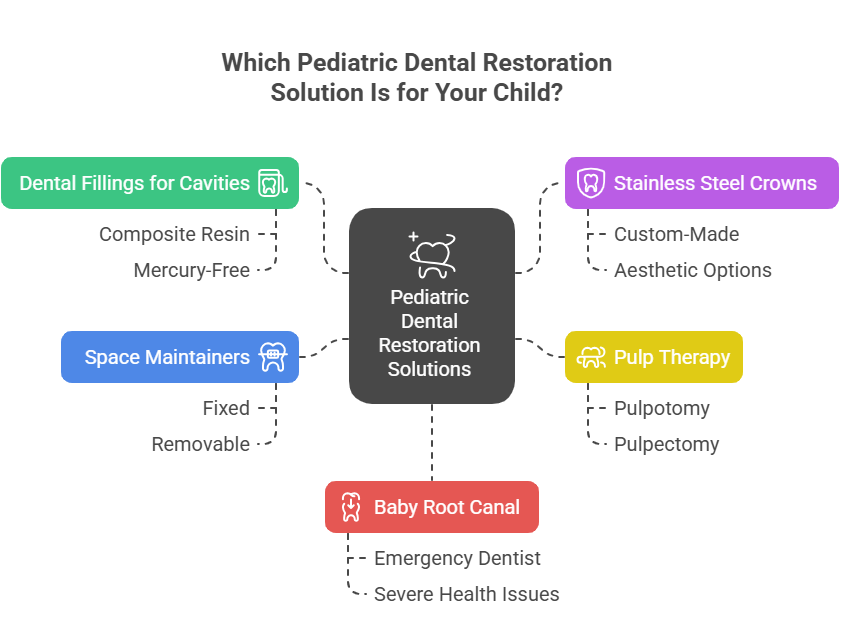
Dental Fillings for Cavities
Tooth decay is the most frequent pediatric dental issue, which often requires dental fillings for children. Pediatric dentists restore decayed teeth using safe, tooth-colored materials like composite resin. These fillings are durable and seamlessly blend with natural teeth with minimal discomfort.
Compared to amalgam, composite fillings are mercury-free and aesthetically pleasing, making them ideal for dental restorations, especially for yellow teeth in kids. Regular checkups with a reliable dentist prevent cavities in baby teeth, but when decay occurs, dental fillings for children offer a quick, effective solution.
Stainless Steel Crowns for Damaged Teeth
For severely damaged or decayed teeth, pediatric dentists restore function with stainless steel crowns. These crowns are custom-made to fit your child’s tooth, protect against further damage, and are a key part of pediatric dental restorations.
Aesthetic options, such as tooth-colored crowns, are also available for the front teeth. Parents should teach children to avoid hard foods to maintain their crowns, as they can break.
Pulp Therapy for Severe Decay
When tooth decay in children reaches the pulp, pediatric dentists restore the tooth with pulp therapy (such as pulpotomy or pulpectomy) to prevent infection and save the tooth. This pediatric dental restoration involves removing the infected tissue and filling the tooth with biocompatible materials, such as gutta-percha.
Pulp therapy bypasses the reasons for tooth extraction, preserving space for permanent teeth. Expert pediatric dentists restore your child’s teeth with pain-free procedures to keep them comfortable.
Space Maintainers for Missing Teeth
Premature loss of baby teeth can lead to misalignment, not to mention how distressing a loose tooth can feel. Pediatric dentists use fixed or removable space maintainers to restore proper spacing, ensuring that permanent teeth erupt correctly.
These devices are custom-designed and monitored during checkups. It’s essential that you seek pediatric dental restorations like space maintainers to support your child’s dental development.
Baby root canal:
Sometimes the decay is too advanced to be treated with dental fillings, and other actions are required. If left untreated, the decay can develop into an infection, leading to gum disease, abscesses, and other severe health issues.
If your child has an infected tooth, contact an emergency dentist for kids to assess their needs and choose the best available option as soon as possible.
Worried About Your Child’s Oral Health?
Contact Pearl Dental Group Today!
Our expert pediatric dentists use child-friendly techniques to ensure comfort and long-term oral health. Contact us at Pearl Dental Group to help you choose the right solution for your child’s smile!
How to Choose the Right Pediatric Dentist for Restorative Care
Selecting a pediatric dentist is critical for effective pediatric dental restorations. Below are key factors to consider when choosing pediatric dentists to restore your child’s smile:
| Criteria | Description |
| Board Certification | Ensure the dentist is trained in pediatric dentistry to provide expert pediatric dental restorations. You can check out RCDSO to verify their credentials. |
| Child-Friendly Approach | A welcoming environment reduces anxiety, making dental visits comfortable for kids during restorations. |
| Experience | Choose pediatric dentists who restore teeth with proven expertise in restorative procedures. |
| Sedation Options | Nitrous oxide or other sedation methods ease discomfort during pediatric dental restorations. |
| Parent Reviews | Check testimonials and patient reviews at Google, Yelp, or RateMDs to confirm the trust and reliability of your pediatric dentist. |
Tips to Prevent the Need for Future Dental Restorations
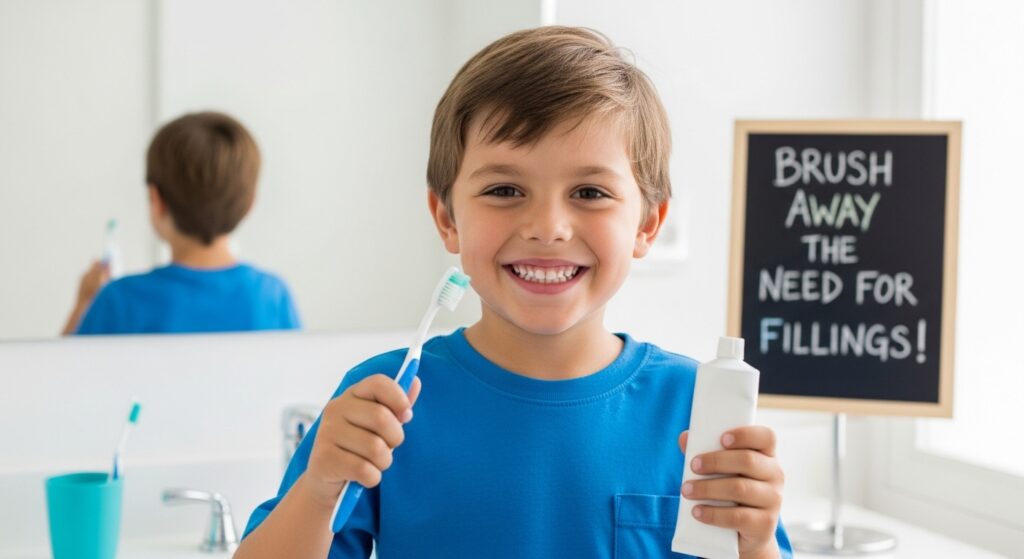
Preventing tooth decay in children reduces the need for pediatric dental restorations. Encourage your child to brush twice daily with fluoride toothpaste to strengthen enamel and protect against cavities in baby teeth. Promoting a healthy oral hygiene routine goes a long way in preventing pediatric dental problems.
Limiting sugary snacks, such as candy and soda, helps prevent tooth decay that requires intervention by pediatric dentists. Schedule regular checkups at a reliable dental clinic to catch issues early, and consider dental sealants to shield teeth from decay to promote long-term oral health.
Furthermore, professional fluoride treatments can strengthen teeth, minimizing the need for future pediatric dental restorations.
Advances in Pediatric Dental Materials
Innovations like bioactive materials enhance pediatric dental restorations by promoting natural tooth repair. The African Journal of Biomedical Research highlights the longevity of materials like glass ionomer for dental fillings in children.
Professional pediatric dentists restore teeth with cutting-edge, safe materials to ensure lasting results for your child’s smile.
Addressing Children’s Dental Anxiety
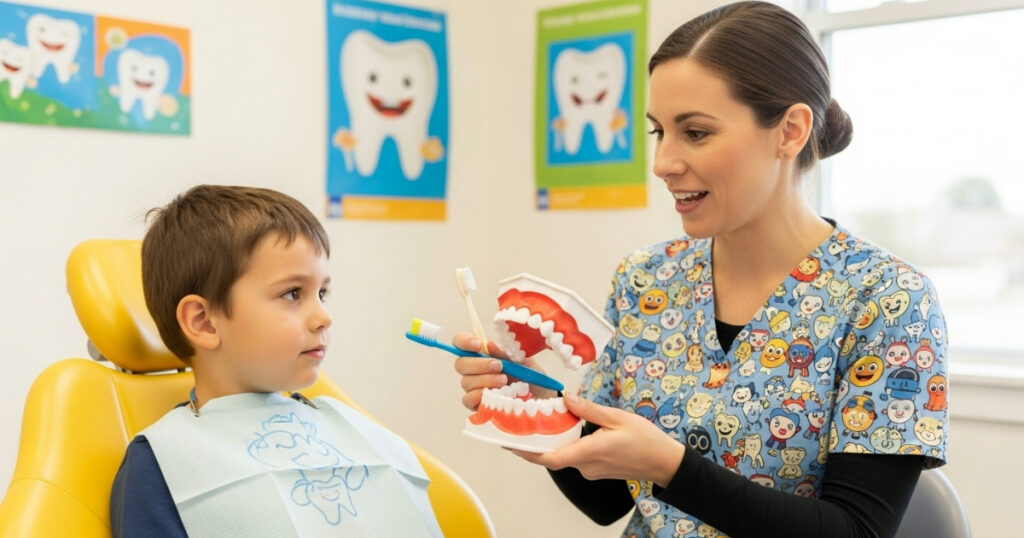
Dental visits can be intimidating for kids, especially during pediatric dental restorations. Explain the process in simple terms to help your child understand what pediatric dentists restore to ease their fears.
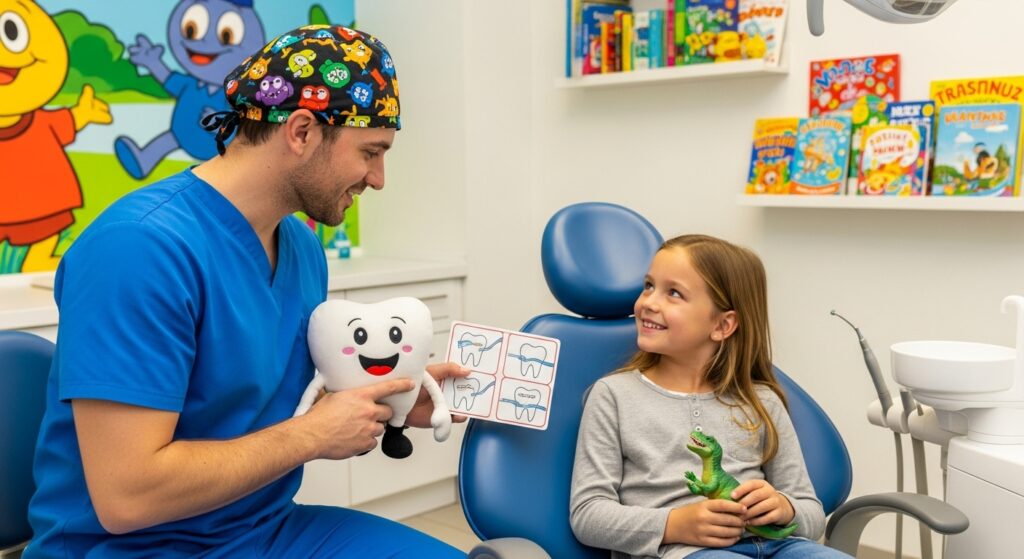
Role-playing dental visits at home builds confidence and familiarity. Choosing a child-friendly dentist creates a fun, welcoming environment for kids. Moreover, different types of sedation dentistry can utilize their equipment, such as laughing gas, which can help children relax during pediatric dental restorations and enhance their comfort.
Pediatric dental restorations are essential for maintaining your child’s oral health and confidence. From dental fillings for children to space maintainers, expert pediatric dentists restore smiles with tailored, pain-free solutions.
FAQ
-
How do I know if my child actually needs a dental restoration?
Signs include tooth pain, sensitivity, visible cavities, or swelling. Pediatric dentists restore teeth after assessing needs through exams and X-rays.
-
Are dental restorations necessary for baby teeth since they eventually fall out?
Yes, pediatric dental restorations prevent pain, infection, and misalignment, supporting overall oral health.
-
What are the safest dental restoration options for children?
Dental fillings for children, stainless steel crowns, and pulp therapy utilize biocompatible materials, such as composite resin, to ensure safe pediatric dental restorations.
-
Will my child feel pain during a dental restoration procedure?
Pediatric dentists restore teeth using anesthesia and sedation to minimize discomfort for their patients. Most children experience little to no pain.
-
How long do pediatric dental restorations last?
Fillings and crowns last several years with proper care, though baby teeth eventually fall out. Regular checkups ensure pediatric dental restorations remain effective.
-
What happens if my child’s cavity or tooth damage is left untreated?
Untreated tooth decay in children can lead to infection, abscesses, or tooth loss, requiring urgent pediatric dental restorations.
-
Are there alternatives to fillings or crowns for kids?
Sealants or fluoride treatments can prevent further decay, but pediatric dentists restore existing damage with fillings or crowns.
-
How much do pediatric dental restorations cost, and will insurance cover them?
Costs vary by procedure. Many insurance plans cover pediatric dental restorations. You can contact us to obtain a precise estimate of the costs and check out the Canadian Dental Care Plan for children to gather more information on which services are covered.
-
How can I help my child avoid needing future dental restorations?
Encourage brushing, flossing, healthy eating, and regular visits to pediatric dentists who restore. Sealants and fluoride help prevent cavities in baby teeth.
-
What should I do if my child is scared of dental procedures?
Choose pediatric dentists who restore and treat patients in a child-friendly environment, explain procedures, and use sedation. Choose clinics like the Pearl Dental Group with specialized sedation dentistry.
Has your child ever visited a pediatric dentist for smile care? Share your story or ask your questions in the comments to help other parents learn from your experience.