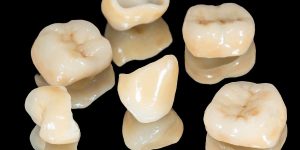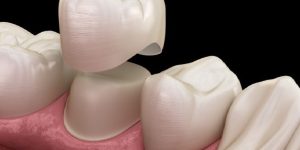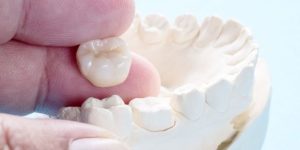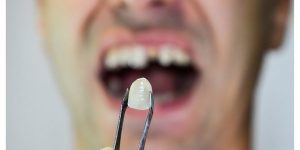



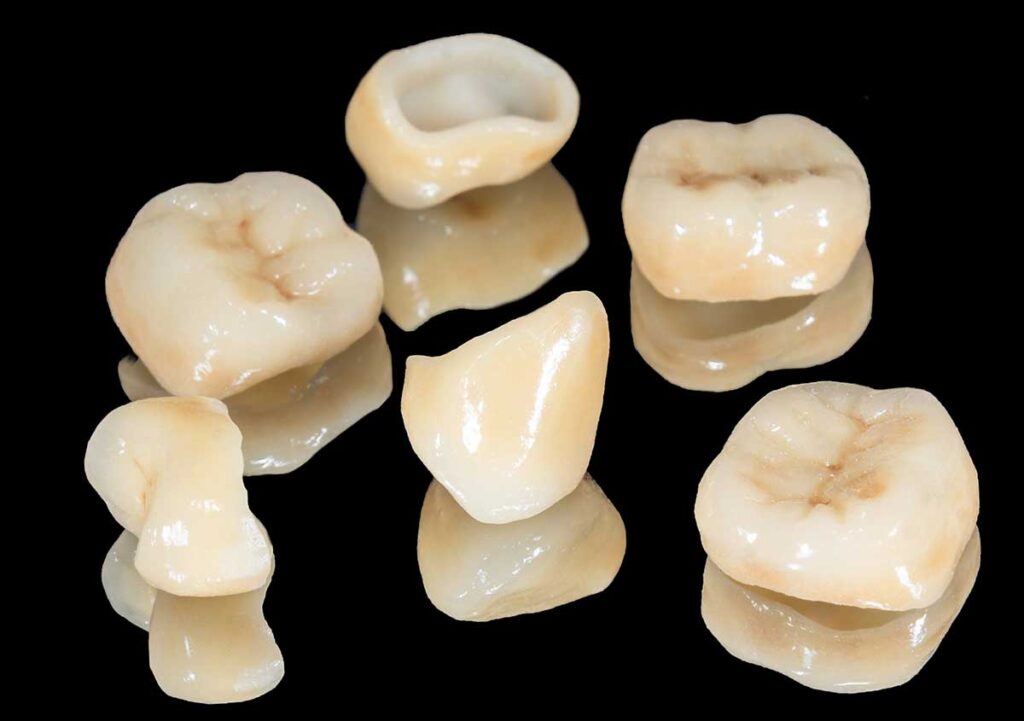
A dental crown is essentially a custom-engineered sleeve designed to fit over the remaining structure of a natural tooth. It acts as a protective barrier, restoring the tooth to its original size, shape, and function. While the concept is simple, the science behind the materials has evolved significantly. Many patients have questions and worries regarding the best materials for dental crowns in 2026. In this article, we will go through the best ones in 2026.
Why Does the Choice of Material Matter?
Selecting a dental crown in Toronto isn’t just about cost. It involves a careful assessment of several factors:
- Aesthetics: For teeth located in the smile zone, choosing a material with natural translucency is vital so that light passes through the crown just like it does through real enamel.
- Durability: Back teeth are the workhorses of the mouth, enduring hundreds of pounds of pressure per square inch during daily chewing and grinding.
- Biocompatibility: To prevent localized inflammation or allergic reactions, the material must be harmonious with your natural gum tissue.
- Longevity: Selecting a high-quality material serves as a long-term investment in your oral health, as the right choice can often last for decades with proper maintenance.
The Best Materials for Dental Crowns in 2026
Now that we know the importance of material selection, let’s find out what the best materials for dental crowns in 2026 are.
Zirconia Crowns
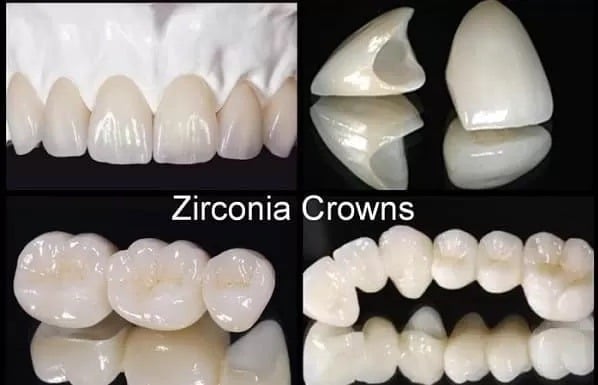
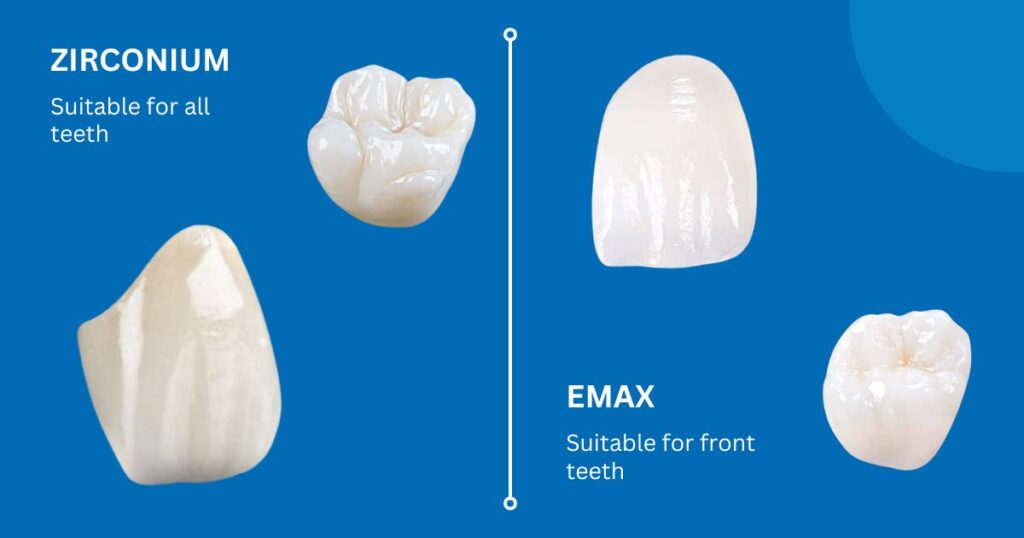
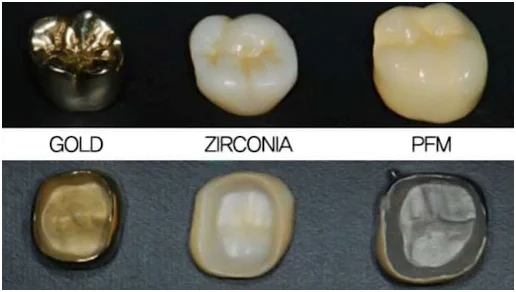
Zirconia has quickly become the industry standard for posterior (back) teeth. It is a type of ceramic that is remarkably strong—often referred to as “ceramic steel.” It is virtually indestructible under normal biting forces, making it the premier choice for patients who have a history of breaking restorations or who struggle with heavy grinding. While older zirconia was quite opaque, modern variations offer a much better color match to natural teeth.
E-max (Lithium Disilicate) Crowns
When it comes to front teeth, E-max is often the gold standard. These crowns are made from a high-strength glass-ceramic that mimics the light-reflecting properties of natural enamel better than almost any other material. Because they can be bonded chemically to the tooth, they often require less tooth reduction than traditional styles.
Porcelain-Fused-to-Metal (PFM) Crowns
PFM crowns have been used in dentistry for over fifty years. They consist of a metal substructure for strength and a porcelain overlay for appearance. They are a versatile middle ground option. However, as gum tissue naturally recedes over time, a thin dark line of the metal base may become visible at the margin, which is why they are less common for front teeth today.
Gold and Metal Alloy Crowns
Though less popular due to their color, gold crowns remain one of the most clinically successful restorations ever created. Gold alloys are incredibly gentle on the opposing teeth, meaning they won’t wear down your natural teeth when you chew. According to clinical overviews from the Cleveland Clinic on dental crown types and procedures, metal crowns rarely chip or break and require the least amount of enamel removal.
Composite Resin and All-Resin Crowns
These are primarily used as temporary measures. While they are the most budget-friendly, they are porous and prone to staining and fractures. We typically use these to protect your tooth while your permanent, laboratory-grade crown is being crafted.
| Material | Durability | Aesthetics | Best Location |
| Zirconia | Very High | Good | Molars / Back Teeth |
| E-max | High | Excellent | Front Teeth / Premolars |
| PFM | High | Fair | All Teeth |
| Gold | Exceptional | N/A | Back Molars |
| Resin | Low | Fair | Temporary Only |
Find the Perfect Crown for your Smile.
At Pearl Dental Group, we use the highest quality materials to ensure your dental crown is a seamless addition to your smile. Join our community of satisfied patients and experience the difference of personalized care.
Factors to Consider When Choosing
Selecting the best material for dental crowns is a collaborative process between you and your dentist. We consider the location of the tooth; for instance, a molar requires the brute strength of zirconia, while an incisor requires the artistry of E-max.
Your bite alignment and lifestyle also play a role. If you have bruxism (teeth grinding), we may recommend a more resilient material to prevent premature wear. Furthermore, research published in PubMed regarding dentist material selection for crowns suggests that the choice often balances clinical evidence with the specific functional needs of the patient’s mouth.
Conclusion
There is no one-size-fits-all material in cosmetic dentistry. The best material for your crown is the one that aligns with your aesthetic expectations, your budget, and the functional demands of your bite. At Pearl Dental Group, we take the time to evaluate your unique situation to ensure your restoration feels like a natural part of your smile for years to come.
Ready to restore your smile? Contact Pearl Dental Group today to schedule a consultation and discover which crown material is right for you.
FAQ
How long do dental crowns usually last?
On average, dental crowns last between five and 15 years. However, with excellent oral hygiene and regular checkups, high-quality materials like zirconia or gold can last 25 years or more.
Will my crown look different from my natural teeth?
Modern materials like E-max and layered zirconia are designed to match the exact shade and translucency of your surrounding teeth. Once placed, a well-crafted crown is virtually indistinguishable from a natural tooth.
Which dental crown material is best for front teeth?
E-max (lithium disilicate) is typically the top choice for front teeth. Its superior translucency allows it to mimic the light-reflecting properties of natural enamel, ensuring your smile looks authentic and bright.
Can I have an allergic reaction to crown materials?
It is possible, particularly with base-metal alloys. If you have known metal sensitivities, all-ceramic options like zirconia or E-max are excellent biocompatible alternatives that eliminate the risk of an allergic response.
Does the crown material affect how much of my tooth is removed?
Yes. Gold and certain high-strength zirconias require the least amount of tooth reduction. Materials like porcelain or PFM generally require a bit more space, meaning your dentist must remove more of the natural enamel to ensure a secure fit.
Have you ever had a dental crown? We’d love to hear about your experience or answer any questions you have in the comments below.