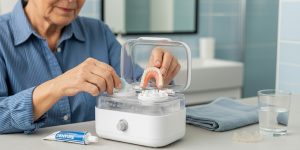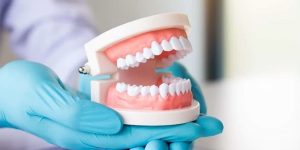



A dazzling, confident smile depends on consistent daily care, especially for those who wear dentures. Just like natural teeth, dentures collect plaque, food debris, and odor-causing bacteria every day. Neglecting this routine can lead to stubborn stains, discomfort, and even oral health issues like denture stomatitis. Choosing the best denture cleaner isn’t about finding a single miracle product; it’s about matching the right tool to your specific appliance type, cleaning goals, and lifestyle.
Do you need a quick refresh or a deep, overnight soak? Let’s review expert recommendations and the best denture cleaners to bring you the definitive guide for a hygienic, brilliant smile.


Quick View: The Best Denture Cleaners for Every Need
| Cleaner Type | Best For | Top Product Examples | Key Feature |
| Effervescent Tablets | Daily disinfection & quick cleaning. | Polident 3-Minute, Efferdent Complete Clean | Kills 99.9% of odor-causing bacteria. |
| Denture Pastes/Creams | Manual scrubbing & targeted spot-cleaning. | Polident Dentu-Creme, Dentu-Creme | Non-abrasive formula protects acrylic. |
| Ultrasonic Cleaners | Deep, hands-free cleaning for all appliances. | Zima Dental Pod, iSonic F3900 | High-frequency sound waves reach crevices. |
| Specialized Powders | Removing heavy, deep-set stains (such as tea and coffee stains). | Stain Away Plus | Professional strength for tough tooth discoloration. |
Why Daily Denture Cleaning is Non-Negotiable
Just like daily cleaning allows you to have healthy teeth, it can help dentures look better. Moreover, it’s vital for your long-term oral health and comfort. Choosing the best denture cleaner for your needs helps you:
- Prevent Infections: Proper cleaning removes biofilm (plaque) and yeast that can cause irritation and conditions like Denture Stomatitis (red, inflamed tissue beneath the denture).
- Maintain Comfort: Plaque and tartar buildup can subtly change the fit of your dentures, leading to sore spots. Regular cleaning ensures the fit remains snug and comfortable.
- Eliminate Odor: The number one source of bad breath is the accumulation of bacteria and fungi. A strong antibacterial cleaner is essential for neutralizing odor at the source.
The Best Denture Cleaner Types and Products
Dentures are among the most common tooth replacement options, and properly maintaining them is one of the ways to achieve a beautiful smile! Now, let’s explore the most recognized denture-cleaning products and, more specifically, the best denture cleaners for everyday use and special needs.
Effervescent Tablets (The Daily Standard)
Effervescent tablets are the most convenient method. They create an oxygen-rich, fizzing solution that lifts stains, breaks down plaque, and kills bacteria without any manual effort.
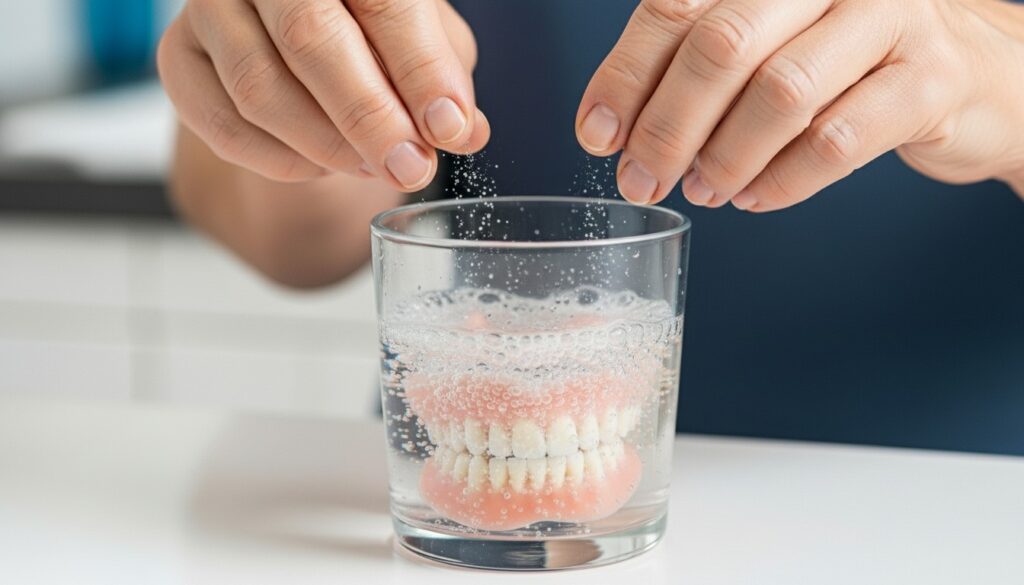
Polident 3-Minute Daily Cleanser
This formula is ideal for those with a busy schedule. It provides reliable antibacterial action and plaque removal in just three minutes, offering a quick, refreshing clean.
Efferdent Complete Clean
Known for its powerful Oxi-Action, this tablet is effective at combating tough stains like coffee, tea, and tobacco. It’s an excellent choice for a nightly soak, ensuring a deep clean and fresh mint flavor.
Polident Overnight Whitening
An extended-wear formula that leverages the soaking time while you sleep. It targets deep stains specifically and provides a gentle whitening effect, restoring the acrylic’s original look.
Contact Us for Comprehensive Dental Care
Wondering if your dentures need a deep cleaning?
Contact Pearl Dental Group Today to get the best treatment!
Denture Cleaning Pastes and Creams (For Manual Scrubbing)
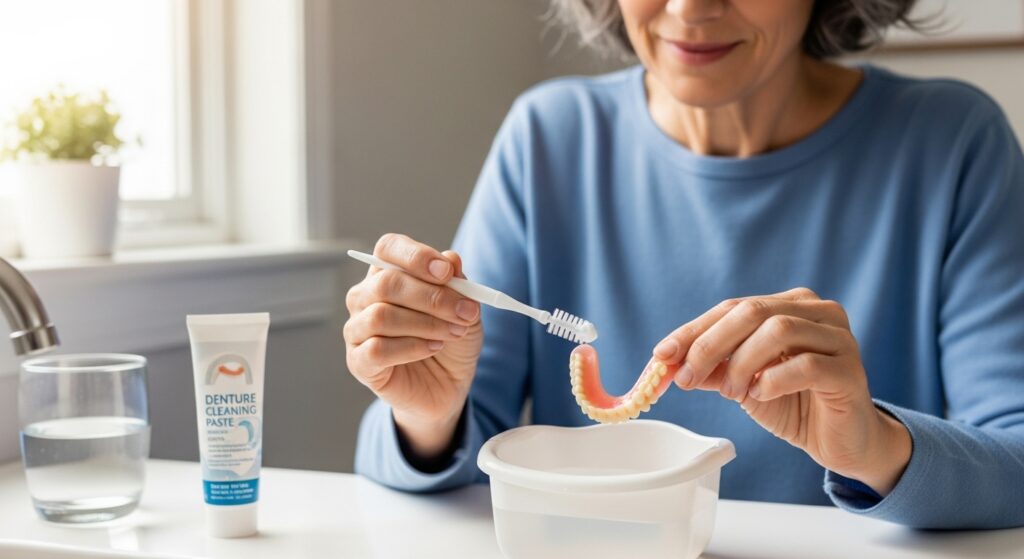
These products are specifically designed for manual brushing. Unlike regular toothpaste, which uses harsh abrasives that can scratch the delicate acrylic surface of dentures, denture pastes are mildly abrasive. This non-damaging formula helps you polish the surface and remove adherent film without creating microscopic grooves where bacteria can hide.
Read More: The Power of Fluoride Toothpaste: A Comprehensive Guide
Polident Dentu-Creme
This is the standard-bearer for denture pastes. Its formula has been proven to be low-abrasive, making it safe for daily brushing. It effectively removes plaque and surface stains and contains a triple-mint formula for maximum freshness.
Specialized Formulas (Powders)
For heavy stains that effervescent tablets struggle with, a professional-strength powder, like Stain Away Plus, can be mixed into a powerful soaking solution for periodic deep-cleans.
High-Tech Solutions: Ultrasonic Cleaners
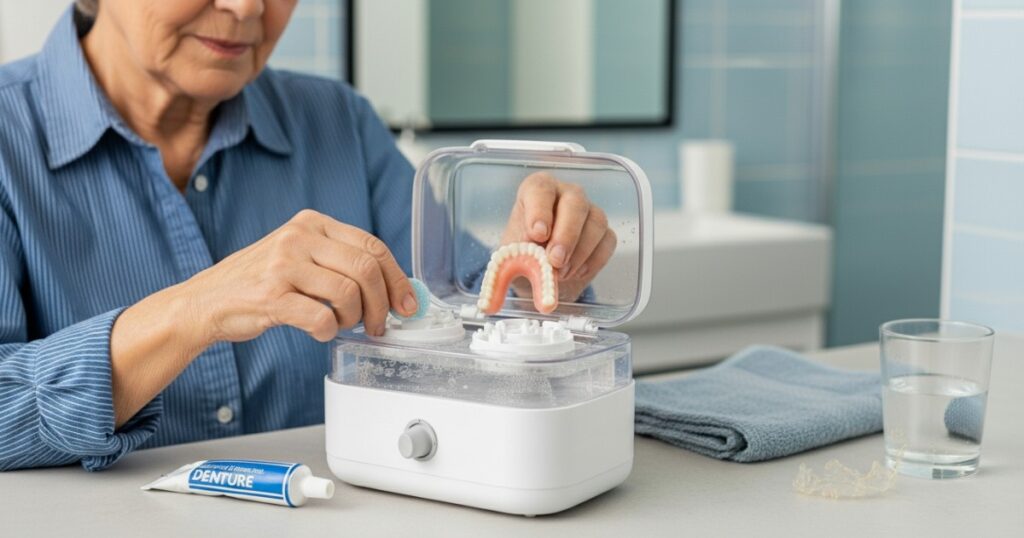
For the ultimate deep clean among the best denture cleaners, ultrasonic devices use high-frequency sound waves (cavitation) to create millions of microscopic bubbles in the water. When these bubbles collapse, they gently but powerfully dislodge debris, plaque, and bacteria from every crevice, including hard-to-reach areas.
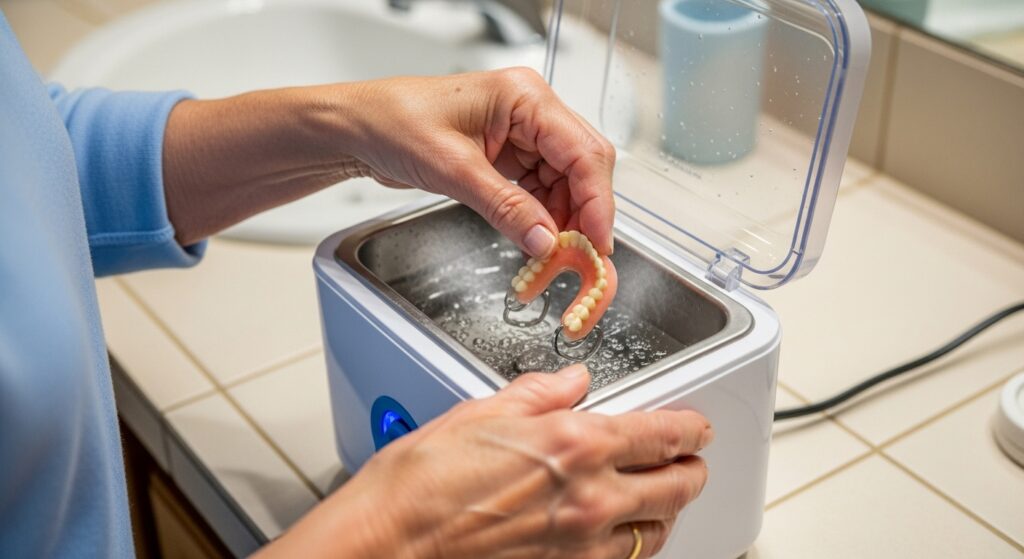
Zima Dental Pod
A popular, compact choice known for its specialized design for all dental appliances, including complete dentures. It offers a powerful clean, often incorporating UV light technology for enhanced sterilization.
iSonic F3900 Ultrasonic Cleaner
An affordable, entry-level ultrasonic cleaner praised for its simplicity and effectiveness. It uses high-frequency vibrations to provide a comprehensive, non-abrasive clean, making it an excellent investment for daily hygiene.
Specialized Cleaners for Unique Needs
According to Nature, denture base and denture teeth materials have different compatibility with different denture cleaning methods. There are also available products for more complex cases, such as partial dentures or those with sensitive materials:
Retainer Brite Tablets
While marketed for retainers, these tablets are highly recommended for partial and flexible dentures. They are formulated to be effective against common stains and odors while remaining gentle on plastics and metal clasps, preventing discoloration and corrosion.
FDC (Flexible Denture Cleaner)
Flexible dentures (like Valplast) require cleaners that are specifically non-corrosive and non-bleach to avoid damaging the specialized thermoplastic material. FDC offers a dedicated solution for these unique appliances.
Daily Care Do’s and Don’ts (Expert Advice)
Choosing the best denture cleaner is not the end of our journey! Proper routine is just as important as the product you use.
| DO | DON’T |
| Rinse Immediately: A quick rinse after every meal removes loose food particles before they adhere and become plaque. | Use Regular Toothpaste: The abrasives in standard toothpaste can scratch your denture’s acrylic, creating permanent places for bacteria and stains to lodge. |
| Brush Gently Daily: Use a soft-bristled denture brush and a non-abrasive paste (or mild hand soap) to clean all surfaces. | Use Hot Water: Hot or boiling water can warp or permanently deform the acrylic base, ruining the fit. Always use warm or lukewarm water. |
| Soak Daily: Allow dentures to soak in water or a dedicated cleansing solution for several hours (ideally overnight) to keep them moist and disinfected. | Use Household Bleach/Cleaners: Harsh chemical cleaners can damage the color and material of your dentures and are dangerous if ingested. |
Read More: Essential Tips Before Getting Dentures You Should Know
Choose the Right Cleaner for a Brighter Smile!
A healthy, bright smile that lasts for years hinges not only on the cosmetic dentistry procedures but also on consistent, proper maintenance. By choosing the right product, whether it’s the simplicity of an effervescent tablet, the targeted cleaning of a non-abrasive paste, or the deep sanitization of an ultrasonic device, you are protecting not just your appliance, but your overall oral health.
Don’t forget to check your dental requirements with the best cosmetic dentists in Toronto regularly for check-ups and professional cleanings, ensuring your dentures continue to fit perfectly and support your quality of life.
FAQ
-
How often should I use a denture cleaner?
You should lightly brush and rinse your dentures after every meal and use a dedicated effervescent tablet or soaking solution for a full, antibacterial deep clean at least once per day (ideally overnight).
-
Is it safe to leave dentures in a cleaning solution overnight?
Yes, provided you are using a non-bleach, dedicated overnight formula like Polident Overnight. Dentures should never be allowed to dry out, as they can lose their shape.
-
Can I use vinegar or bleach to clean my dentures?
Vinegar (a 50/50 mix with water) is a safe, occasional soak to remove tartar, but should not replace daily cleansers. Bleach should be avoided entirely, as it can be corrosive to metal partials and damage the pink acrylic color.
-
What kind of brush should I use on my dentures?
You should use a specially designed soft-bristled denture brush or a very soft toothbrush. Hard bristles and abrasive regular toothbrushes will scratch the appliance’s surface.
-
Can I use dish soap to clean my dentures?
Yes, mild, non-toxic, clear liquid dish soap is an excellent, gentle, non-abrasive alternative for manually brushing your dentures daily. Always rinse the soap completely afterward.
-
Do ultrasonic cleaners replace soaking tablets?
No, they work best together. The ultrasonic cleaner’s cavitation physically removes debris, and the antibacterial soaking solution (tablets or liquid) performs the chemical disinfection. Use them in combination for the deepest clean.
-
Why do my dentures still smell after cleaning?
Persistent odor usually indicates residual bacteria, plaque, or fungal growth (like Candida). Switch to a stronger antibacterial soak, manually brush all surfaces, or consider using an ultrasonic cleaner for deeper sanitization.
-
Should I brush my gums if I wear full dentures?
Yes. You should gently brush your gums, tongue, and the roof of your mouth with a soft toothbrush every morning before inserting your dentures to stimulate circulation and remove bacteria.
-
What should I do if my dentures have tough stains?
For heavy stains (like from coffee or smoking), use a specialized, concentrated powder like Stain Away Plus for a deep, periodic soak. If that fails, consult your dentist, who can perform a professional, ultrasonic cleaning.
-
How often do I need to replace my dentures?
Most full and partial dentures need to be relined or replaced every 5 to 10 years. The acrylic and gums change shape over time. Regular cleaning helps maintain the appliance, but a professional assessment is necessary to ensure a continued safe and proper fit.
What kinds of denture-cleaning products do you use? Are you satisfied with its accessibility and ease of use? Share your experience or drop your questions in the comments so others can learn from you.