

Are you a coffee or tea lover? Then, you should know how these popular drinks can cause serious dental issues. Coffee and tea stains on teeth are undeniable. But we don’t say you should quit drinking them; rather, do it responsibly. In this blog, we’ll explore how coffee and tea can change the color of your teeth and what you can do to keep your smile bright. Ready to uncover the truth and learn some easy tips, including teeth whitening methods, to protect your teeth? Let’s dive in!
How Do Coffee and Tea Stain Your Teeth?
Coffee and tea have substances called tannins. Tannins are a type of plant compound found naturally in drinks like coffee and tea. They can stick to your teeth and make them look discolored. They can also make your teeth more likely to absorb other colors, which can lead to even more staining. When you drink coffee or tea, the tannins in these drinks cling to the tiny grooves and rough spots on your teeth.
This causes a layer of stain to build up over time. If you drink these beverages often, the stains can become more noticeable and harder to remove. However, there is more to the story! They tend to cause other dental problems, which you can learn more about in the next section.
How Coffee and Tea Cause Dental Problems
Coffee and tea aren’t just bad for your teeth because they cause stains. They can also lead to other dental problems. Both coffee and tea are acidic. This acidity can damage your teeth by consuming it over and over.
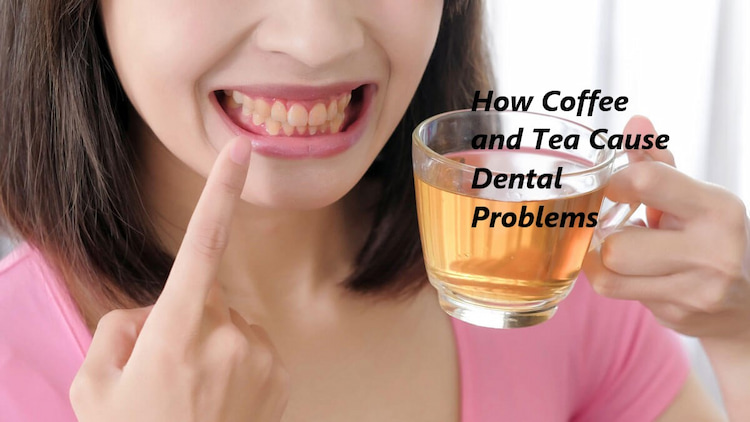
Let’s take a look at how these beverages harm your teeth.
- Acid can wear down the enamel on your teeth. This is called acid erosion.
- When enamel gets damaged, your teeth can become more sensitive and are at higher risk for cavities.
- Coffee, in particular, can make your mouth dry. The lack of saliva helps acids and bacteria harm your teeth more easily.
- Drinking coffee or tea, especially when used with sugar, can lead to more plaque build-up on your teeth, leading to tooth decay and gum disease.
- Coffee has a strong smell that can linger in your mouth, while tea, especially black tea, can cause your breath to smell less fresh.
Contact Us if Suffering From Dental Problems
Our dentists at Pearl Dental Group are equipped with advanced technology and methods to treat any type of dental issue, including those resulting from coffee and tea stains. Please reach out to us for professional treatments.
How Different Types of Tea Affect Teeth Staining
If you are a real tea lover, you might be interested to know the effects of other tea types on your teeth staining. Here is the information you need to know about how different types of tea affect tooth staining:
Black Tea
Black tea is one of the most staining teas because it contains high levels of tannins and dark pigments. It is generally considered more likely to discolor teeth than most other teas.
Green Tea
Green tea contains fewer tannins than black tea, but regular consumption may still lead to mild gray or yellow staining over time.
Peppermint Tea
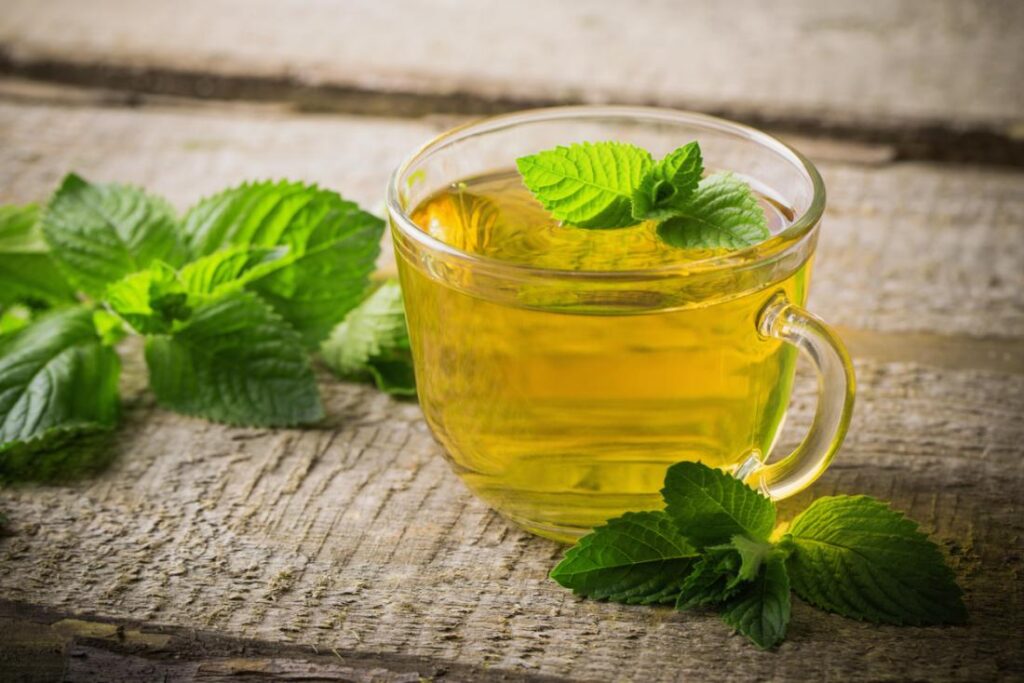
Peppermint tea is generally considered one of the least likely teas to stain teeth. Unlike black tea, green tea, and some darker herbal teas, pure peppermint tea is naturally very light in color and contains relatively low levels of tannins. Tannins are plant compounds that can bind to tooth enamel and contribute to surface staining over time.
White Tea
White tea is less processed and contains lower concentrations of tannins. Although it is less likely to stain than black tea, it can still contribute to discoloration with frequent use.
Oolong Tea
Oolong tea is partially oxidized and falls between green and black tea in terms of staining potential.
Chamomile Tea
Chamomile tea is very light in color and contains relatively low levels of staining compounds, making it less likely to discolor teeth.

Hibiscus Tea
Hibiscus tea has a deep red color and can stain teeth because of its strong natural pigments and acidic nature.
Rooibos Tea
Rooibos tea is naturally caffeine-free and generally contains fewer tannins than black tea, but its reddish-brown pigments may still cause mild staining with frequent consumption.
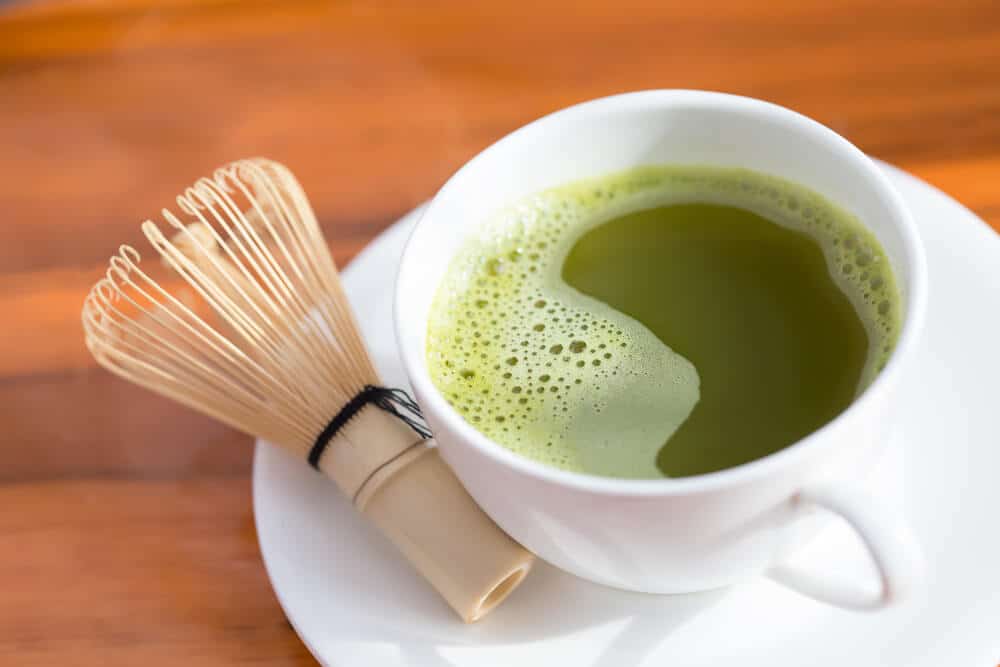
Matcha
Because matcha is made from finely ground whole green tea leaves, it may have a greater staining effect than regular green tea when consumed regularly.
Chai Tea
Chai is typically made with black tea and spices. Since it usually contains black tea, it has a relatively high potential to stain teeth.
| Rank | Tea Type | Staining Potential |
|---|---|---|
| 1 | Peppermint Tea | Very Low |
| 2 | Chamomile Tea | Very Low |
| 3 | White Tea | Low |
| 4 | Herbal Tea (General) | Low to Moderate |
| 5 | Rooibos Tea | Low to Moderate |
| 6 | Green Tea | Moderate |
| 7 | Oolong Tea | Moderate to High |
| 8 | Matcha Tea | High |
| 9 | Hibiscus Tea | High |
| 10 | Berry Herbal Teas | High |
| 11 | Chai Tea | High |
| 12 | Black Tea | Very High |
4 Treatments That Help Remove Stains
In this section, you’ll learn about the different methods we use to remove existing stains from our patients’ teeth.
1. Professional Dental Cleaning
This method can only restore teeth to their natural colour, but it is not effective for bleaching teeth or changing their underlying shade. That is why we recommend professional teeth whitening if discoloration remains after dental cleaning.
Put simply, we use professional cleaning and polishing techniques to remove stains caused by tea or coffee from the tooth surface.
At Pearl Dental Group, professional teeth whitening is provided by Dr. Ebrahim Aminsalehi, a dentist with more than 30 years of experience in restorative and cosmetic dentistry. Dr. Aminsalehi has been an Assistant Professor since 1995 and has lectured at international dental conferences and contributed to peer-reviewed dental research. He is registered with the Royal College of Dental Surgeons of Ontario (RCDSO #105992) and has specialized training in restorative dentistry. With his background in cosmetic dentistry and smile design, he brings extensive clinical experience to professional teeth whitening and other aesthetic dental treatments.
2. Whitening Toothpaste
Like professional dental cleaning, whitening toothpaste can only remove extrinsic (surface) stains through mild abrasives that polish the tooth surface. That said, some products also contain low levels of peroxide, which can provide some additional whitening.
This treatment does not help with intrinsic stains beneath the surface. We put it this way:
Whitening toothpastes can help reduce tea and coffee stains on the tooth surface, but they are not a substitute for professional whitening.
Read more: “Top Whitening Toothpastes of 2026 for a Radiant Smile”
3. Over-the-Counter Whitening Products
Whitening strips and gels are popular over-the-counter (OTC) whitening products that can address stains caused by coffee or tea.
Interestingly, they do not simply remove surface stains. Instead, they lighten the natural tooth color to fade stains. Compared with professional whitening treatments, OTC products usually have lower concentrations of peroxide. As a result, we suggest that our patients use them repeatedly over a longer period to get noticeable results.
Although these products can be effective, temporary tooth sensitivity and gum irritation are possible side effects of these products. Also, it is worth noting that this method does not work for all types of discolorations.
4. Professional Teeth Whitening
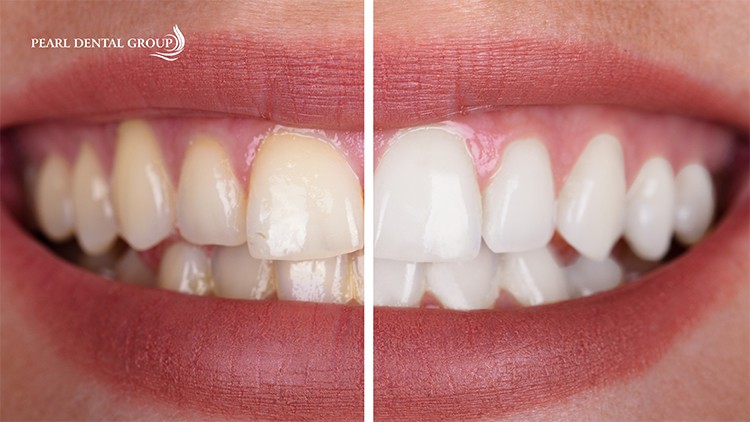
Professional teeth whitening can be an effective option for tea and coffee stains.
The procedure involves the use of peroxide-based bleaching agents to break down the compounds that cause tooth discoloration.
While professional dental cleaning removes only surface stains, whitening can lighten natural tooth color and address some deeper discoloration.
These are two common professional approaches to teeth whitening:
- In-office whitening: A higher-concentration whitening gel is applied to your teeth in a dental clinic. This method delivers noticeable results in less time.
- Dentist-provided take-home whitening: Your dentist provides custom-fitted trays and professional-strength whitening gel for at-home use. This method takes longer to show results.
If professional teeth whitening can remove these stains, why isn’t it suitable for every patient? This is because before applying this method, we should check several factors like cavities, gum problems, existing restorations, and the type of discoloration.
When Whitening May Not Be the Answer
Intrinsic stains that are caused by:
- Aging
- Fluorosis
- Certain medications
- Tooth trauma
can occur within the tooth structure and cannot be treated with professional whitening, with either in-office or dentist-provided take-home whitening.
While some of these stains may respond to bleaching, others may respond less effectively and require a different treatment.
Additionally, whitening is not effective for changing the color of dental restorations, such as dental crowns, veneers, fillings, and other tooth-coloured restorations. This means that when surrounding teeth lighten, these restorations remain their original shade.
This is another important factor that we consider when determining if whitening is appropriate.
Professional Whitening vs. Over-the-Counter Products
As discussed earlier, professional whitening and OTC products are two common methods to address teeth stains caused by tea or coffee. The table below compares them:
| Factor | Professional Whitening | OTC Products |
| Where | Dental office | At home |
| Whitening agent | Higher-strength peroxide | Lower-strength peroxide |
| Results | Faster | More gradual |
| Supervision | Dentist supervised | Self-applied |
| Customization | Can be customized | Standard products |
| Cost | Higher | Lower |
| Sensitivity | Possible | Possible |
| Best for | Faster, more controlled whitening | Gradual whitening at home |
In summary, while OTC products can be effective if used exactly as instructed, they generally take longer to produce good results.
Tips for Coffee and Tea Lovers: Drink Them Responsibly
As we discussed so far, coffee and tea can stain your teeth and can cause other problems. These dental problems can leave you with the need for dental and cosmetic treatments, and spending your days at dentistry clinics. However, if you learn healthy coffee and tea drinking habits and follow some essential steps, you can successfully prevent the consequences.
- Try using a straw when drinking.
Drinking coffee or tea through a straw can reduce the amount of liquid that touches your teeth. This can minimize the staining effects and acid erosion.
- Rinse your mouth after drinking.
Once you’re done drinking coffee or tea, rinse your mouth with water if you don’t have your brush with you. This can wash away acids and sugars that can harm your teeth.
- Brush your teeth.
If you’ve just had coffee or tea, wait about 30 minutes before brushing. This gives your enamel time to re-harden after being softened by the acids.
- Drink water to keep your mouth hydrated.
If it’s impossible to rinse your mouth or brush your teeth, you can drink water along with your coffee or tea. This helps to keep your mouth moist and produce more saliva.
- Choose other, less acidic options.
Some days, you can replace coffee and tea with less acidic alternatives. For example, green tea is often a better choice than black tea because it is less likely to stain your teeth and is gentler on your enamel.
- Follow a nutritious diet with enough fruits and vegetables.
If you have healthy eating habits and a diet rich in fruits, vegetables, and dairy products, you’re less likely to encounter coffee and tea impacts on your teeth. This is only effective when you follow other recommended ways discussed earlier.
How to Whiten Your Stained Teeth?
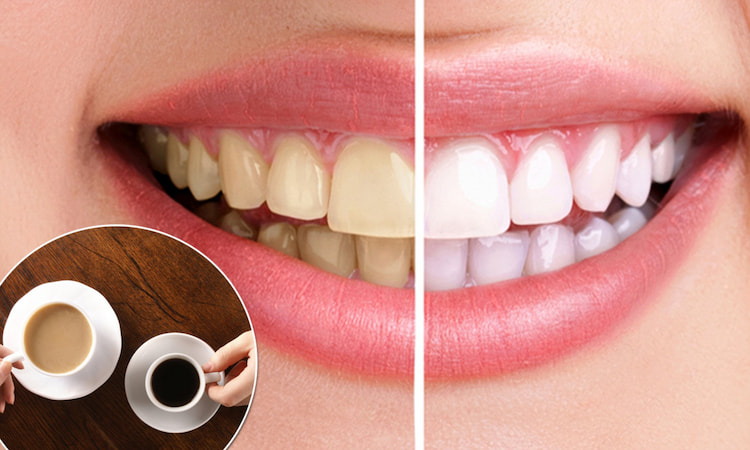
If your teeth are already stained by coffee and tea, you don’t have to worry, as there are several teeth whitening options. Whitening toothpaste is a simple and effective way to remove surface stains on your teeth. These toothpastes contain special ingredients that break down and remove stains caused by foods and drinks.
Whitening strips are another popular and convenient option for removing deeper stains from your teeth. These thin, flexible strips are coated with a whitening gel that contains peroxide, which removes stains. To use them, you apply the strips to your teeth for a specified amount of time, usually about 30 minutes, and then remove them.
Moreover, the most effective option available is professional teeth whitening treatments like Zoom teeth whitening. This is considered a cosmetic dental procedure, and special tools and ingredients are used to thoroughly remove surface and deep stains. Eventually, it makes your teeth look brighter and your smile more beautiful.
Final Word
Enjoying your coffee and tea doesn’t have to mean sacrificing your smile. You only need to follow the simple tips in this blog to stay away from the staining effects of coffee and tea. Remember, taking good care of your teeth is important for your overall health and well-being.
If you need professional advice or help with maintaining your dental health, our friendly team at Pearl Dental Group is here to help you. Just make sure you share your coffee and tea drinking habits with them and get personalized tips and treatments to ensure your smile stays sparkling. Contact us today at Pearl Dental Group to learn more about how we can help you keep your teeth in top shape!
FAQs
Are there alternatives to coffee and tea that are better for my teeth?
Yes, several alternatives are gentler on your teeth, including herbal teas, green tea, milk, fruit juice, and detoxes.
Are coffee and tea stains on teeth permanent?
Coffee and tea stains on teeth are not necessarily permanent, but they can be persistent. These stains can usually be reduced or removed with proper dental care. Professional cleanings at your dentist’s office can help remove most surface stains. Additionally, professional whitening treatments can eliminate deeper stains.
Does mint tea stain teeth?
Mint tea, like other herbal teas, is generally less likely to stain teeth compared to black tea. However, it is still possible for it to cause some staining over time, especially if consumed frequently. While mint tea is less acidic and has fewer tannins, it’s still a good idea to maintain good oral hygiene practices.
Does peppermint tea stain teeth?
Peppermint tea is unlikely to stain teeth significantly. Because it is light in color and naturally low in tannins, it has a much lower staining potential than black tea or coffee. However, frequent consumption over time may still cause minor surface discoloration.
Does herbal tea stain teeth?
Some herbal teas can stain teeth, depending on their color and ingredients. Light-colored teas such as chamomile and peppermint are less likely to cause staining, while darker blends like hibiscus, berry, and rooibos teas may leave surface stains with regular use.