



Smoking is one of the toughest challenges to maintaining a bright, white smile. The combination of nicotine and tar penetrates tooth enamel, leading to persistent yellow or brown discoloration that often resists standard over-the-counter (OTC) whitening products.
If you are a smoker or have recently quit, achieving a radiant smile is absolutely possible, but it requires a specialized teeth whitening approach. In this guide, we will cut through the noise to detail the best teeth whitening for smokers, focusing on those powerful enough to tackle even the most stubborn tobacco stains.
Quick Guide: The Best Teeth Whitening for Smokers
Here is a rapid breakdown of the best teeth whitening for smokers, based on stain severity and desired speed of results:
| Whitening Option | Stain Severity & Speed | Key Features & Effectiveness |
| 1. Professional In-Office Power Whitening | Severe Stains / Fastest Results | Uses the highest concentration of peroxide gel (up to 40%), often activated by a specialized light. Delivers the most dramatic results in a single, one-hour session. Ideal for deep, years-old tobacco stains. |
| 2. Dentist-Prescribed Custom Take-Home Kits | Moderate-to-Severe Stains / Gradual Results | Includes custom-fitted trays and professional-strength gel. Trays ensure even coverage and gum protection. More effective than OTC kits for smokers, with results seen over 10-14 days. |
| 3. Over-the-Counter (OTC) Whitening Strips/Gels | Mild/New Stains / Slow Results | Convenient and affordable. Best used for lifting very minor surface stains or, more importantly, for maintaining professional results after treatment. They are generally not strong enough for deep tobacco discoloration. |
| 4. Professional Dental Cleaning | Pre-Whitening Essential | This must be done first. It removes plaque and hardened tartar (calculus) barriers, allowing the whitening gel to contact the enamel uniformly and maximize your final results. |
| 5. Whitening Toothpaste | Daily Maintenance | Contains mild abrasives or low-level peroxide to polish the surface and prevent new extrinsic stains from setting. It cannot remove old, deep stains, but it is crucial for preserving a white smile. |

Why Traditional Whitening Fails Smokers: Understanding Tobacco Stains
The tooth discoloration caused by smoking is uniquely tenacious. Most other stains come from chromogens in coffee, tea, or red wine. Tobacco, however, introduces two staining agents that create deep, set-in discoloration:
- Tar: A sticky, dark residue that adheres strongly to the surface of the enamel.
- Nicotine: While colorless initially, nicotine turns yellow upon contact with oxygen, which then deeply permeates the tiny pores of your tooth structure.
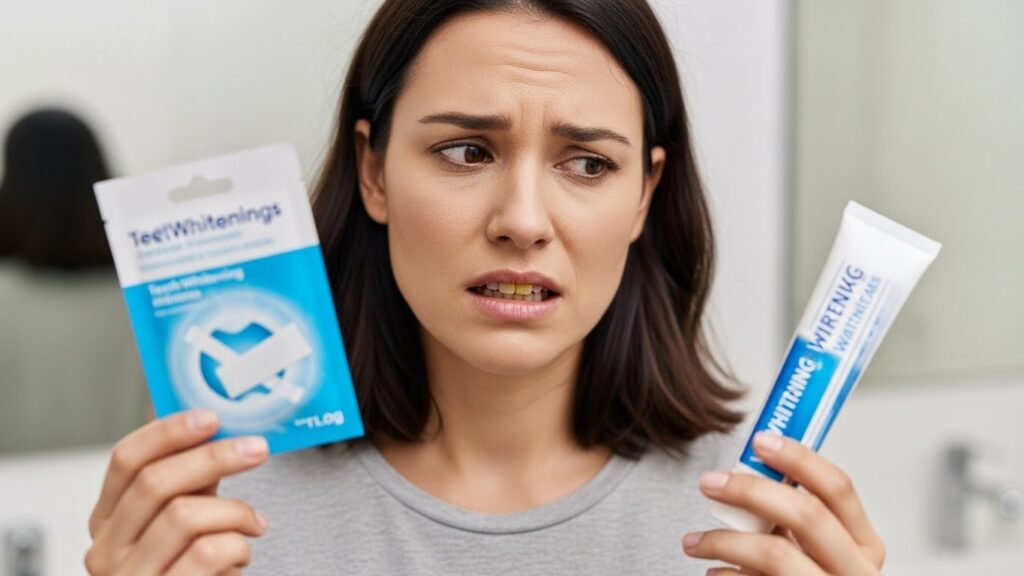
These stains are often classified as extrinsic (surface) and can become intrinsic (deeply embedded) over time. Generic whitening strips and toothpastes often lack the necessary concentration of bleaching agent (peroxide) to penetrate the enamel deeply enough to break down these compounds, necessitating professional intervention.
Read More: Why Teeth Whitening Fails: Important Reasons Explained
The Gold Standard: Professional Solutions for Deep Stains
For smokers dealing with moderate to severe staining, professional dental treatments are the most reliable path to achieving significant and lasting results. These options use high-concentration gels applied under the supervision of a dental professional.
In-Office Power Whitening
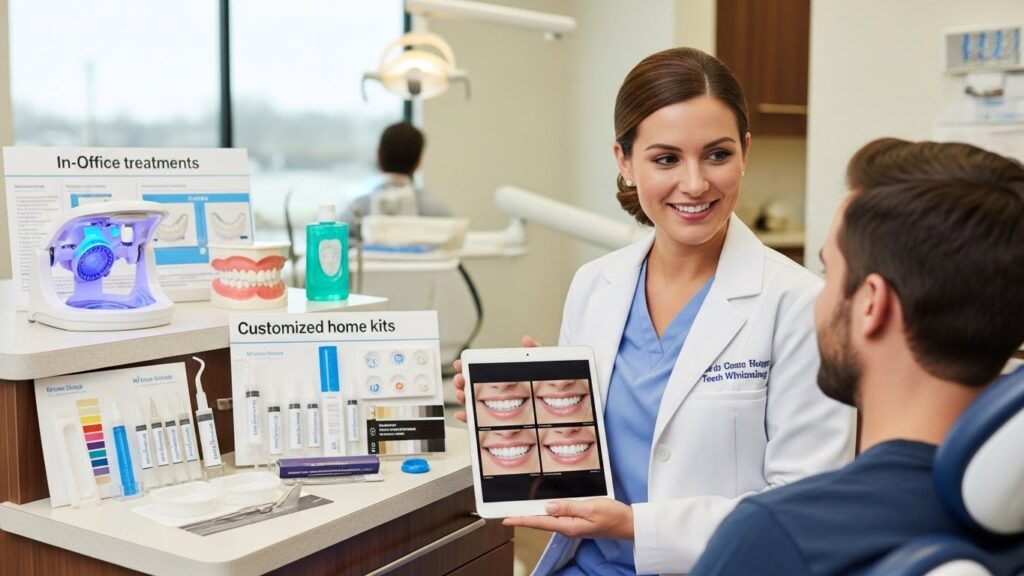
Professional in-office whitening is the best teeth whitening for smokers. Dentists apply a highly concentrated hydrogen peroxide gel (up to 40%) directly to the teeth. The process is often accelerated using a specialized light or laser.
This professional approach delivers noticeable results in as little as one hour, making it ideal for those seeking immediate improvement. It is the safest method for using high-concentration gels, as the dental team meticulously protects the gums and soft tissues. In-office treatments are ideal for individuals seeking the full benefits of teeth whitening, including those with deep, stubborn stains and those who want the fastest possible transformation.
Dentist-Prescribed Custom Take-Home Kits
For those who prefer a more gradual at-home whitening process, custom kits provided by your dentist offer a robust, controlled solution. Unlike one-size-fits-all trays, custom-fitted trays mold perfectly to your dental structure.
This ensures complete coverage of the professional-grade whitening gel (typically carbamide peroxide) across the entire tooth surface, preventing missed spots and minimizing gum irritation. These fits are ideal for maintaining results after an in-office treatment or for gradually tackling stains over 10 to 14 days.
Contact Us for Comprehensive Dental Care
Wondering what professional teeth whitening suits your needs?
Contact Pearl Dental Group Today to find the best option for your needs!
Pre-Whitening Essentials
Regardless of which whitening method you choose, a critical first step for any smoker is preparation. Whitening gels work best on clean, healthy teeth.
Comprehensive Dental Check-up and Cleaning
Before any of the best teeth whitening for smokers, you must schedule a professional dental cleaning. Plaque and hardened tartar buildup (calculus) are common in smokers and must be removed entirely. Check-ups and cleanings are crucial because plaque acts as a barrier, preventing the whitening agent from contacting the enamel. By having a deep clean first, you ensure the bleaching gel can work uniformly across your teeth, maximizing the final shade improvement.
Read More: 5 Tips To Have A Beautiful Smile
At-Home & Over-the-Counter Options (Best for Maintenance)
While not powerful enough to remove years of deep tobacco staining alone, OTC products and quick teeth whitening methods are highly effective for minor surface stains, touch-ups, and long-term maintenance.

Whitening Strips and Gels
Modern high-quality whitening strips and gels contain milder peroxide concentrations and can be helpful for minor, recent stains. This approach is favorable due to its convenience and accessibility. They work well as a maintenance tool, lifting new surface stains before they can set deep into the enamel.
Specialized Whitening Toothpaste and Rinses
Whitening toothpastes contain mild abrasives (like baking soda) or low-concentration chemical agents designed to polish the enamel. Used daily, these products, aside from your regular fluoride toothpaste benefits, prevent the daily accumulation of new extrinsic coffee and tea stains. They are an essential part of the post-whitening routine to preserve your bright results.
Read More: 5 Best Teeth Whitening Gums: Ingredients and How They Work!
Making the Results Last: Long-Term Maintenance Tips
The longevity of your whitening results and having healthy teeth are directly related to your lifestyle habits. If you continue to smoke, regardless of the best teeth whitening for smokers, stains will inevitably return faster.
- Reduce or Quit Smoking: The single most effective action you can take is to eliminate the root cause of the staining. Even reducing your daily intake will significantly slow the rate of discoloration.
- Rinse Immediately: After every cigarette, immediately rinse your mouth thoroughly with water. This washes away residual nicotine and tar before they can bond with your enamel.
- Use a Straw: When consuming dark, staining liquids like coffee, tea, cola, or red wine, use a straw to minimize direct contact with the front surfaces of your teeth.
- Practice Consistent, Meticulous Oral Hygiene: Brush twice daily for two full minutes, focusing on the surfaces most affected by smoking. Floss daily, as nicotine and tar often accumulate between teeth.
- Don’t Overdo: According to WebMD, if you follow an OTC product’s directions and get good results, a once-a-month redo session is usually enough. Once your teeth reach a shade you like, you’ll need to repeat the bleaching sessions every 2 years or less.
- Schedule Regular Check-ups: Visit your dental professional for routine cleanings and check-ups. They can spot and address minor stain recurrence before it becomes severe enough to require a full treatment cycle.
Your Path to a Brighter, Healthier Smile
Choosing the best teeth whitening for smokers is a journey that starts with a clear understanding of the challenge and a commitment to professional-grade solutions. While over-the-counter products can help with touch-ups, deeply set nicotine and tar stains require the strength of professional in-office power whitening or dentist-provided custom take-home kits.
If you are ready to remove years of tobacco stains and regain a vibrant smile, consulting with a dental professional is the crucial first step. Have the best cosmetic dentists in Toronto assess and customize whitening plans to effectively combat the toughest stains.
FAQ
-
Why don’t OTC whitening strips work well for smokers?
OTC strips usually lack the high concentration of peroxide needed to penetrate and break down deep, set-in nicotine and tar stains.
-
What is the best teeth whitening for smokers with heavy stains?
Professional in-office power whitening uses high-concentration gels and light activation to deliver the fastest, most dramatic results for deep tobacco stains.
-
How soon after professional whitening can I smoke again?
You should avoid smoking for at least 48 hours after treatment. Teeth are highly porous immediately following whitening and will re-stain quickly.
-
Is it safe to whiten my teeth if I have existing fillings or crowns?
Yes, but the whitening gel will only work on natural enamel. Existing restorations (fillings, crowns, veneers) will not change color, which may result in mismatched shading.
-
Do I need a professional cleaning before whitening?
Yes, absolutely. Tartar and plaque buildup must be removed first. They act as barriers, preventing the whitening gel from evenly contacting the enamel.
-
What is the difference between custom and generic whitening trays?
Custom trays are perfectly molded to your teeth, ensuring uniform gel contact and protecting your gums. Generic trays often fit poorly, leading to uneven results and increased gum irritation.
-
How long do the results of professional whitening last for a smoker?
Results typically last 6 months to a year, but this varies based on your smoking frequency and diligence with at-home maintenance (brushing, rinsing, and using touch-up kits).
-
Will teeth whitening increase my tooth sensitivity?
Temporary tooth sensitivity is common. Dentists can mitigate this by using protective barriers, reducing treatment time, or applying desensitizing gels containing potassium nitrate or fluoride.
-
What can I do immediately after smoking to prevent stains?
Immediately rinse your mouth thoroughly with water to wash away residual nicotine and tar before they can bond strongly to the enamel.
-
Can I whiten my teeth if I use a vape/e-cigarette?
While vaping may produce fewer yellow stains than traditional smoking, the chemicals can still cause discoloration. The same professional treatments are recommended for e-cigarette stains.
Have you ever had a teeth whitening treatment? What kind of professional treatment did you choose? Share your experience or drop your questions in the comments so others can learn from you.