



One of the most common reasons patients visit Pearl Dental Group is severe pain caused by a tooth abscess. From an emergency dentist’s perspective, tooth abscess stages follow a fairly predictable pattern.
The infection usually starts deep inside a tooth or within the surrounding gum tissues and gradually progresses as bacteria spread. While some abscesses develop slowly, others can worsen surprisingly fast, causing significant pain, facial swelling, and serious health risks.
Knowing tooth abscess stages can help you recognize warning signs earlier and understand when professional treatment becomes urgent.
Learn more about the available treatment options in our guide on how to treat a tooth abscess.
Tooth Abscess Stage 1: Early Infection Inside the Tooth
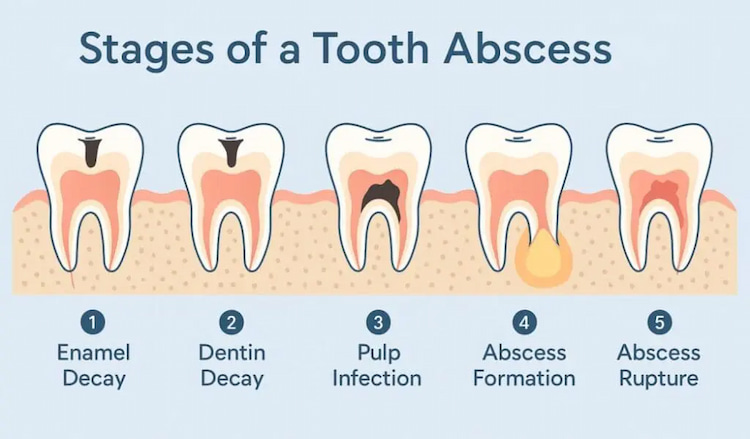
The first tooth abscess stage often begins long before a patient realizes an infection is developing. At this point, bacteria penetrate the protective enamel and move deeper into the tooth structure. Many patients experience little to no discomfort during this tooth abscess stage.
Patients frequently report occasional sensitivity to cold drinks, sweets, or certain foods. Some notice a cavity but postpone treatment because the tooth is not causing significant pain.
A simple dental filling may be enough to stop the infection at this stage. Once bacteria continue moving deeper into the tooth, treatment often becomes more complex.

Tooth Abscess Stage 2: Infection Reaches the Nerve
As bacteria spread through the dentin, they eventually reach the dental pulp, where the tooth’s nerves and blood vessels are located. This stage is often when patients begin searching for emergency dental care.
Symptoms Become More Noticeable
The inflamed nerve tissue creates increasing pressure inside the tooth. Many patients describe:
- Sharp tooth pain that comes and goes
- Sensitivity to hot and cold temperatures
- Pain while chewing
- Discomfort that worsens at night
Emergency Dental Abscess? Get Treatment Before the Infection Spreads.
Learn more about our Emergency Dental Abscess Treatment service and what to expect during your visit.
Fluoride helps strengthen tooth enamel, supports the remineralization of early weakened areas, and makes teeth more resistant to the acid attacks that cause decay. Learn more about the benefits of fluoride toothpaste.
What Happens If Treatment Is Delayed?
Without intervention, the infection can destroy the pulp tissue entirely. Once the nerve dies, the pain may temporarily decrease, causing some people to believe the problem has resolved.
In reality, the infection is progressing into the next tooth abscess stage.

Tooth Abscess Stage 3: Abscess Formation Around the Root
This is the stage where a true abscess develops. After the pulp dies, bacteria travel through the root canals and exit through the root tip. The body attempts to contain the infection, resulting in the formation of pus.
What Patients Usually Experience
Pain often becomes severe and persistent. Common symptoms include:
- Throbbing toothache
- Swollen gums
- Bad taste in the mouth
- Persistent bad breath
- Tenderness when touching the tooth
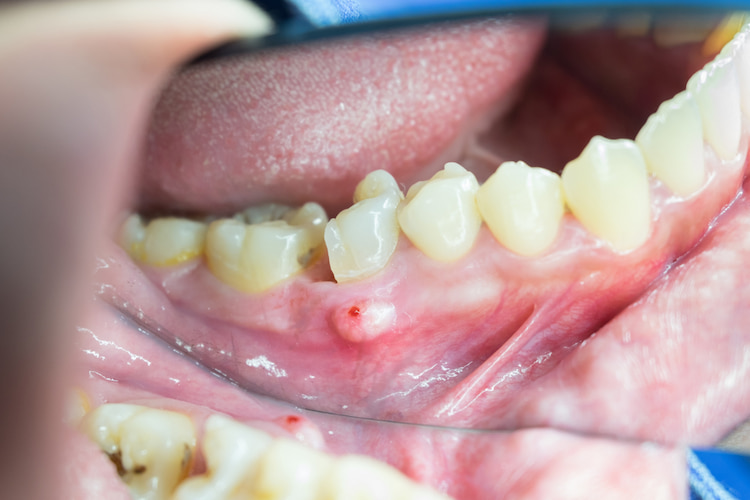
Some patients notice a small bump on the gum that periodically drains fluid. At this point, the infection has moved beyond the tooth itself. Without treatment, surrounding tissues may soon become involved.
Read more: effective ways to eliminate bad breath.
Tooth Abscess Stage 4: Infection Spreads Beyond the Tooth
This is one of the tooth abscess stages that concerns emergency dentists the most. The infection begins affecting nearby tissues, including the gums, jawbone, and facial structures.
Patients commonly arrive at our office with visible swelling on one side of the face. The swelling may extend into the cheek, jawline, or beneath the eye, depending on which tooth is involved.
As inflammation increases, patients may struggle with speaking, chewing, sleeping, or fully opening their mouths. At this stage, immediate professional treatment is highly recommended.
Tooth Abscess Stage 5: Advanced Infection and Serious Complications
A dental infection should never be underestimated. Although uncommon, untreated abscesses can spread into deeper facial spaces and other areas of the body.
Certain symptoms suggest the infection may be becoming more serious. These symptoms include:
- Fever
- Difficulty swallowing
- Difficulty breathing
- Significant facial swelling
- Swollen lymph nodes
- General feelings of illness
Why Emergency Care Is Critical
When a dental infection spreads beyond its original location, the risks increase significantly. Immediate assessment helps determine the extent of the infection and the treatment required.
Fast to Reach in North York!
Our clinic is right on Finch Avenue West with free on-site parking and transit at the door, so you can reach us fast from anywhere in North York, Toronto, and Richmond Hill.
Can a Tooth Abscess Drain on Its Own?
Yes, an abscess can sometimes rupture and release pus. Many patients call our office after noticing sudden drainage accompanied by a reduction in pain.
Does Drainage Mean the Infection Is Gone?
No. The release of pressure may reduce discomfort, but the source of infection remains. Without proper treatment, the abscess frequently returns. Professional evaluation is still necessary even if symptoms improve.
Dr. Ehsan Bayegan: For readers who would like to learn more about the causes, symptoms, and potential complications of a tooth abscess stage, the Mayo Clinic‘s guide on tooth abscesses provides additional educational information.
Emergency Treatment Options for Tooth Abscesses
When the tooth can be preserved, root canal therapy is often recommended to remove infected tissue from inside the tooth and seal the root canal system. In cases where a pocket of pus has formed, abscess drainage may be performed to relieve pressure and reduce discomfort.
Antibiotics may also be prescribed when swelling extends into surrounding tissues or when there are signs that the infection is spreading. If the tooth has been severely damaged and cannot be restored, tooth extraction may be the most appropriate option to eliminate the source of infection and help prevent further complications.
How to Reduce the Risk of Future Tooth Abscesses
Preventing an abscess is always easier than treating one. Small cavities, cracked teeth, and damaged restorations should be evaluated before bacteria gain access to deeper structures.
Regular dental examinations and professional cleanings allow developing issues to be identified before infection occurs. Persistent sensitivity, recurring tooth pain, and swollen gums should never be ignored. Even mild symptoms can indicate the beginning of a developing infection.
Practical tips and daily habits for healthy teeth that can help improve oral health and prevent future dental concerns.
Take Action During the Early Tooth Abscess Stages to Protect Your Oral Health
A tooth abscess can begin as a minor dental issue, but the infection may continue progressing through different tooth abscess stages if it is left untreated. Seeking professional dental care early can help control the infection, reduce discomfort, protect the affected tooth when possible, and lower the risk of more serious complications.
If you experience ongoing tooth pain, gum swelling, sensitivity, a bad taste in your mouth, or other signs of infection, schedule a same-day dental evaluation in North York. A thorough examination and appropriate imaging can help your dentist determine the stage of the abscess and recommend suitable treatment options, such as root canal therapy, drainage, restorative care, or extraction when necessary.
FAQ
-
How quickly can a tooth abscess progress?
Some infections develop gradually over several months, while others worsen within a few days. The speed often depends on the cause and the individual’s immune response.
-
Can a tooth abscess spread without causing severe pain?
Yes. Some infections continue spreading even after the nerve inside the tooth has died, which may reduce pain temporarily.
-
Is facial swelling always an emergency?
Facial swelling caused by a dental infection should be assessed promptly because it may indicate the infection has moved beyond the tooth.
-
Will antibiotics cure a tooth abscess permanently?
Antibiotics may help control the infection, but they usually do not eliminate the source. Additional dental treatment is commonly required.
Have You Ever Had a Dental Abscess? Share your experience or questions in the comments below.