



Tooth pain that occurs with swelling or tooth discoloration, does not improve over time, gets worse when biting, or comes with sensitivity to hot or cold foods and drinks, it may indicate that the patient needs an emergency root canal to treat the underlying problem.
This blog explains when immediate dental care is necessary and when it is safe to wait a short time before seeing your dentist.

7 Signs That You May Need an Emergency Root Canal
These symptoms may indicate that you need an emergency root canal to treat severe tooth pain:
1. Persistent Severe Tooth Pain
If the toothache keeps returning or occurs without an obvious trigger, it can be a sign of inflammation or infection of the dental pulp. The pain may also radiate to the jaw or nearby teeth, or become worse when biting or chewing.
Although persistent pain does not necessarily mean that a root canal is required, it is best to see a dentist promptly for a thorough assessment.
2. Extreme Sensitivity to Hot or Cold
Brief sensitivity to very hot or cold foods and drinks usually disappears within a few seconds and can be normal. However, intense sensitivity that lingers for a longer period may be a sign of a more serious dental issue that needs immediate attention.
Your dentist should evaluate the problem to determine whether a root canal is required. In general, if one tooth repeatedly reacts strongly to hot or cold, especially with lingering pain, it suggests that a root canal may be necessary.
3. Pain When Biting or Chewing
Tooth pain when biting or chewing may be caused by:
- A cracked tooth
- Deep decay
- A damaged filling
- Inflammation or infection
Sharp pain may indicate damage to the tooth’s internal tissues. For this reason, an experienced dentist should evaluate the situation to determine whether you need root canal therapy.
4. Swelling in Your Face or Gum
If the affected tooth is swollen and tender, it is usually a sign of a dental abscess or infection. In these circumstances, book an appointment with your dentist promptly and allow them to decide if root canal treatment is urgent to remove the infected pulp.
Remember that ignoring facial or jaw swelling can lead to more severe pain, as the infection can spread into surrounding tissues, which can make the infection more difficult to treat.
Read more: “Tooth Abscess Treatment Guide for Our North York Patients”
5. A Pimple-Like Bump on Your Gum
A small bump on the gum near a tooth can be a dental abscess or sinus tract. A sinus tract can develop when an infection drains through the gum. Since an infected tooth can be the source of the problem, prompt dental evaluation is essential. In some cases, an emergency root canal may be needed to remove the infected pulp and save the tooth.
Do Not Let a Toothache Disrupt Your Day
Tooth pain can make it difficult to focus on your daily activities. If you have persistent tooth pain, contact us immediately to book an appointment and get rid of the pain that is affecting your daily routine.
6. A Darkened or Discoloured Tooth
If a tooth suddenly changes color and becomes darker than surrounding teeth, it may signal significant damage or pulp death. That said, discoloration can have several causes, and it alone does not confirm that a root canal is necessary.
If discoloration occurs along with the symptoms discussed above, such as persistent pain and swelling, it is a reason to see your dentist promptly to evaluate the tooth.
Typically, dentists recommend an emergency root canal if the pulp is infected and no longer viable.
7. A Cracked or Broken Tooth Down to the Pulp
A crack or break that extends into the tooth’s pulp can expose the nerves and blood vessels inside. After that, bacteria may enter and cause inflammation or infection. In this situation, symptoms may include severe pain, particularly when chewing or biting.
As explained, in many cases, dentists recommend an emergency root canal as an appropriate treatment to remove the affected tissue and prevent further damage. However, tooth extraction may be the best option if the crack extends below the gum line.
What the Procedure Involves
Although not all emergency root canal treatments are the same, they generally follow four steps:
- Our dental team examines the tooth and reviews your symptoms. If necessary, we take a digital X-ray to assess the tooth and surrounding structures. This helps determine whether a root canal is required.
- We apply local anesthesia to numb the area before beginning the treatment. If you have severe dental anxiety, we offer sedation options to help you stay relaxed during the procedure.
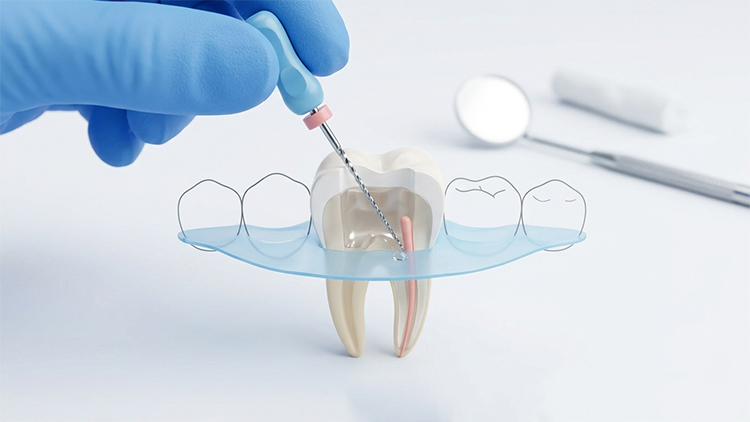
- The dentist creates an opening in the affected tooth to remove the infected or damaged pulp. Next, they clean and disinfect the root canals and may also shape them to prepare them for filling.
- The dental team uses a biocompatible material to fill the cleaned canals and seal them to prevent bacteria from entering the canals again.
When Root Canal Treatment Can Wait
Regardless of how severe it is, a toothache is frustrating and may disrupt a person’s daily routine. Nevertheless, not all tooth pain requires a same-day emergency root canal. If you are not experiencing swelling or other signs of infection, which we discussed earlier, you can schedule a regular dental appointment, rather than seeking urgent dental care.

Note that waiting does not mean ignoring the problem. Pain that persists for more than a day or two should be evaluated by a dentist to determine its cause and the appropriate treatment.
Get Expert Care for Your Emergency Root Canal
In this blog, we explained that when severe tooth pain is accompanied by signs of infection, such as a dental abscess, an emergency root canal is often required to treat the infection and relieve the pain. We also discussed that when the pain is mild and there are no signs of infection, there is no need for urgent attention, and you can schedule a regular visit.
Ignoring a toothache can allow the underlying problem to worsen. So, contact us today if you are in Toronto and book an appointment with our dental team at Pearl Dental Group to have the tooth evaluated and the appropriate treatment determined.
FAQ
Can I wait to see if the pain goes away?
Mild tooth pain that improves and has no swelling or other concerning symptoms may not require same-day treatment. However, persistent tooth pain should not be ignored, as an untreated pulp infection can worsen and may eventually lead to an abscess or tooth loss
Is a root canal supposed to hurt?
With modern local anesthesia, most patients should not experience significant pain during a root canal, although some pressure may be felt. Mild soreness or sensitivity for a few days afterward is common and should gradually improve.
How soon can I get an emergency root canal appointment?
The timing depends on the severity of the symptoms and the dental clinic’s availability. Severe pain or signs of infection should be reported when booking so the dentist can determine how urgently the tooth needs to be assessed and treated.
Will an emergency root canal always save the tooth?
No. Root canal treatment can save most teeth with infected or inflamed pulp, but a tooth may need extraction if it has a severe root fracture, inadequate bone support, or cannot be restored.
Do you have any questions or concerns about root canal treatment? Share them in the comments section below. Our team can answer your questions.